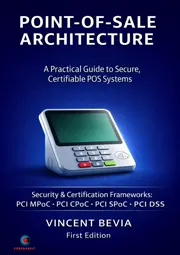
Architecting modern payment acceptance is harder than it looks. Between EMV, SoftPOS/MPoC, PCI DSS, HSMs, ISO 8583, Tap to Pay on COTS devices, and backend patterns that must stay idempotent under retries, it is easy to get lost in vendor docs and scheme PDFs.
This book ties those pieces into one architecture-first guide for engineers who need to design and ship real POS and SoftPOS systems — not just draw scheme diagrams.
Who this is for
- Software engineers and architects building POS or SoftPOS systems
- Teams preparing for EMV L2/L3 certification or MPoC lab work
- Technical leads integrating acquirer hosts, ISO 8583, and terminal SDKs
What you will learn
- Terminal and SoftPOS form factors — traditional EMV, SmartPOS, Tap to Pay, MPoC
- Trust and cryptography — DUKPT, EMV cryptograms, HSM flows, PIN blocks, PCI PTS vs MPoC
- Application architecture — layered POS design, authorization state machines, offline flows
- Backends and schemes — ISO 8583, acquirer integration, L3 testing, certification reality
- Future-facing patterns — wallets, unattended flows, AI-driven fraud, post-quantum key management
Inside the book
Most POS documentation tells you what the specs say. This book focuses on how practitioners actually ship — the architectural choices that survive certification, production load, and scheme audits.
A partial approval is a good example. The issuer did not decline. The sale is also not complete. Many stacks still treat payment as binary. The book walks through the terminal state, host logic, reversal amounts, and clearing boundaries that keep partial approvals from becoming expensive mistakes — not as a footnote, but as part of a coherent transaction model.
Sample chapters
Download a sample chapter below, or email me for the full PDF where noted.
Part 1 — Foundations
POS landscape, terminal types, certification mindset, and the architecture patterns that recur across every deployment.
Sample — EMV authorization lifecycle
From tap to host response: kernel behavior, cryptograms, CVM, and where online authorization fits.
Sample — Offline and store-and-forward
Deferred authorization, storage architecture, synchronization, and reconciliation when the link drops.
Part 1 is available as a free PDF — email me.