Debugging EMV Offline Data Authentication: DDA, CDA, DDOL and CAPKs
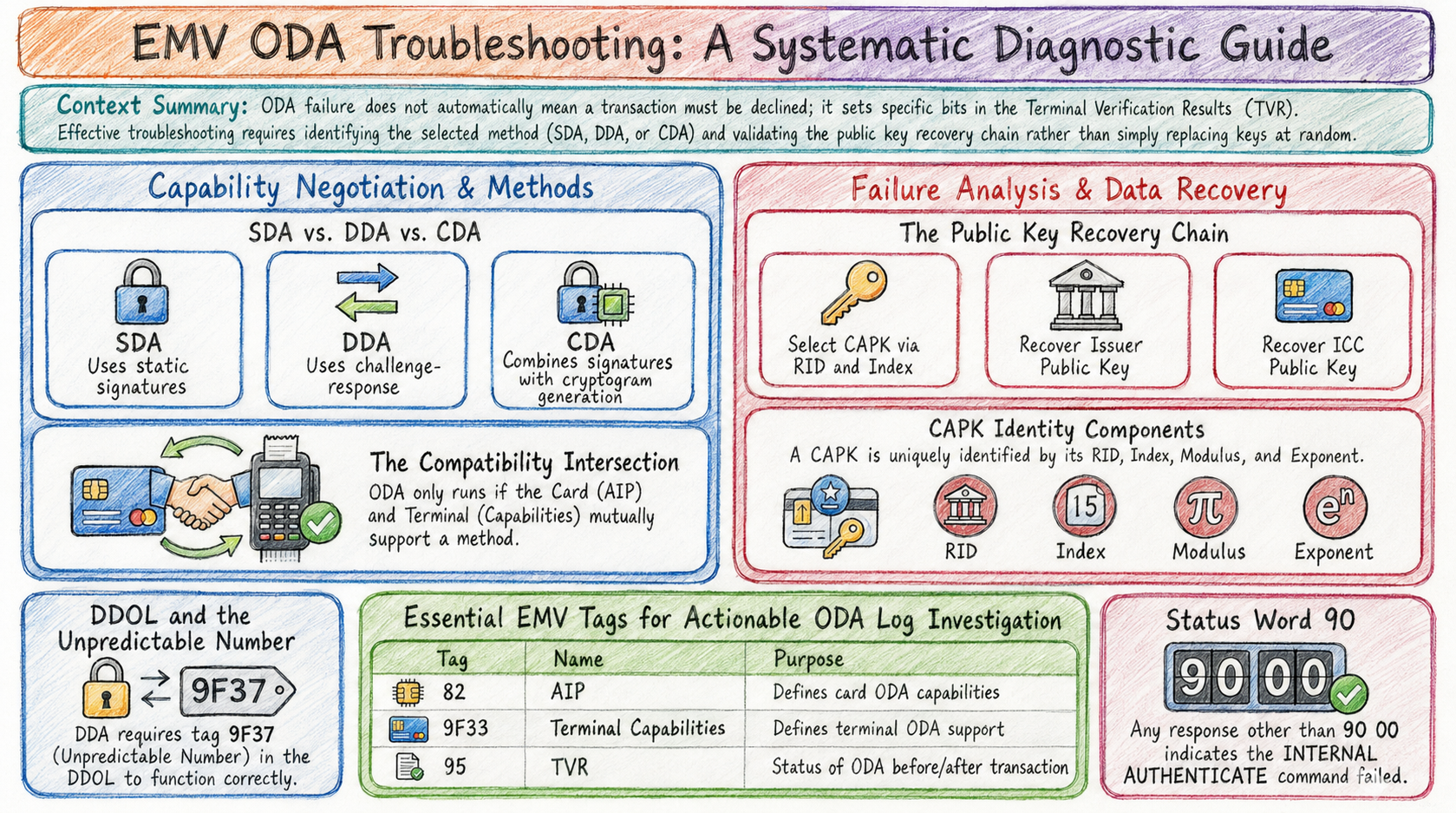
When Offline Data Authentication (ODA) fails, replacing Certification Authority Public Keys (CAPKs) at random is rarely productive. Most field failures sit earlier in the chain: …
When Offline Data Authentication (ODA) fails, replacing Certification Authority Public Keys (CAPKs) at random is rarely productive. Most field failures sit earlier in the chain: …
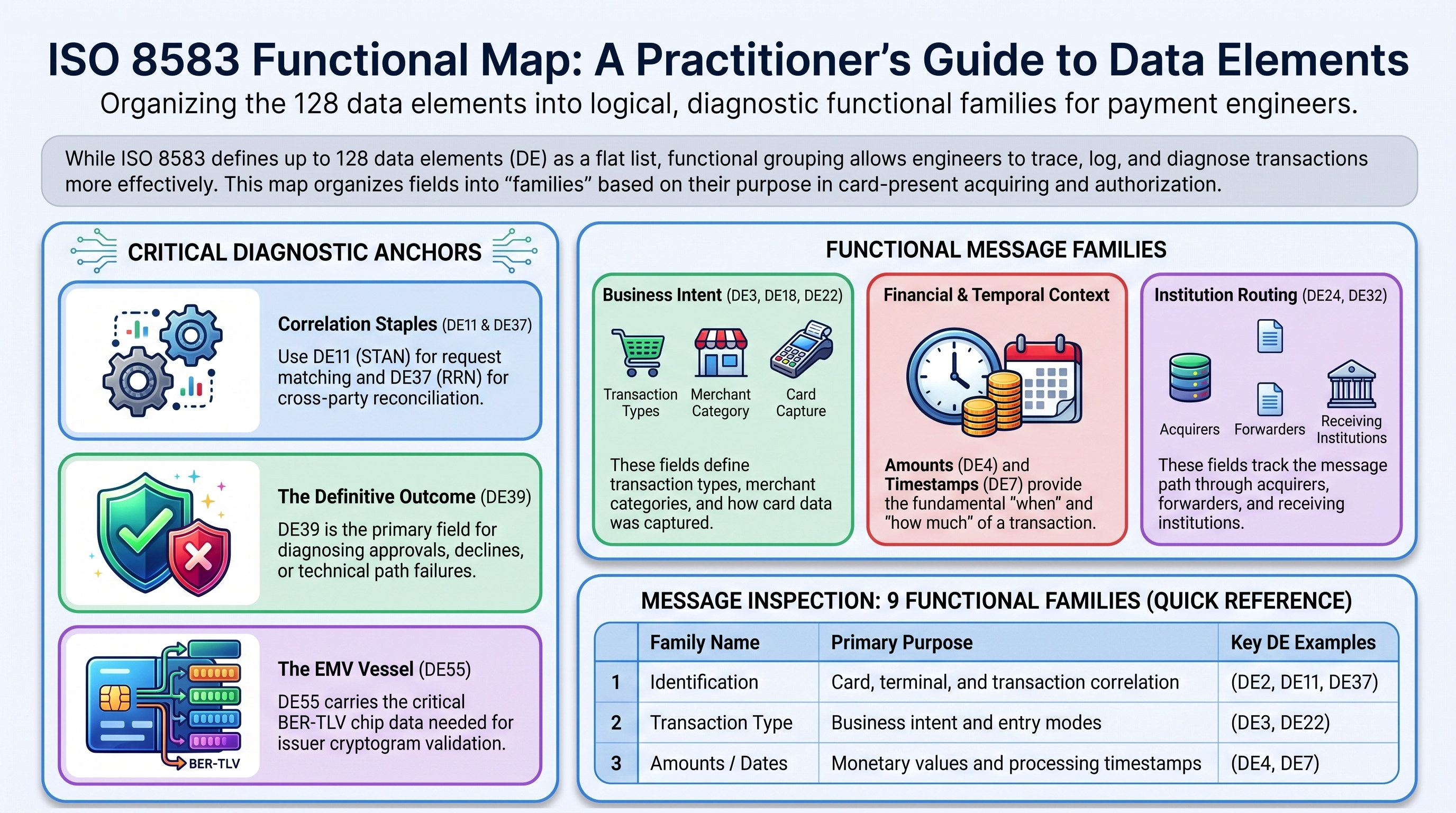
ISO 8583 defines up to 128 data element positions. Treated as a flat numbered list, they are hard to reason about. Grouped by function — the way working engineers already inspect …

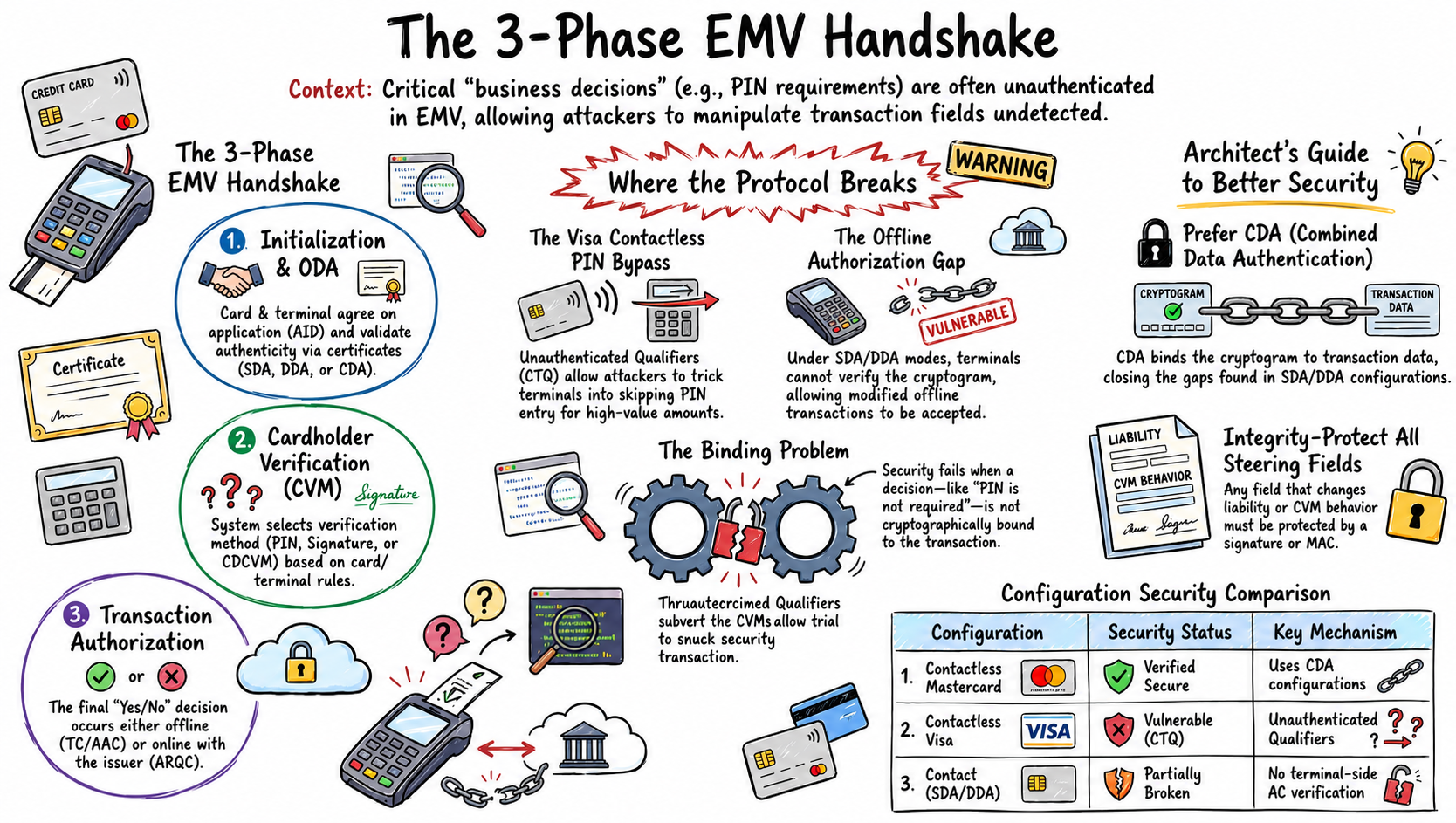
EMV is often treated as a solved security problem. Billions of cards, decades of deployment, and strong cryptography create the impression that the protocol is fundamentally sound …

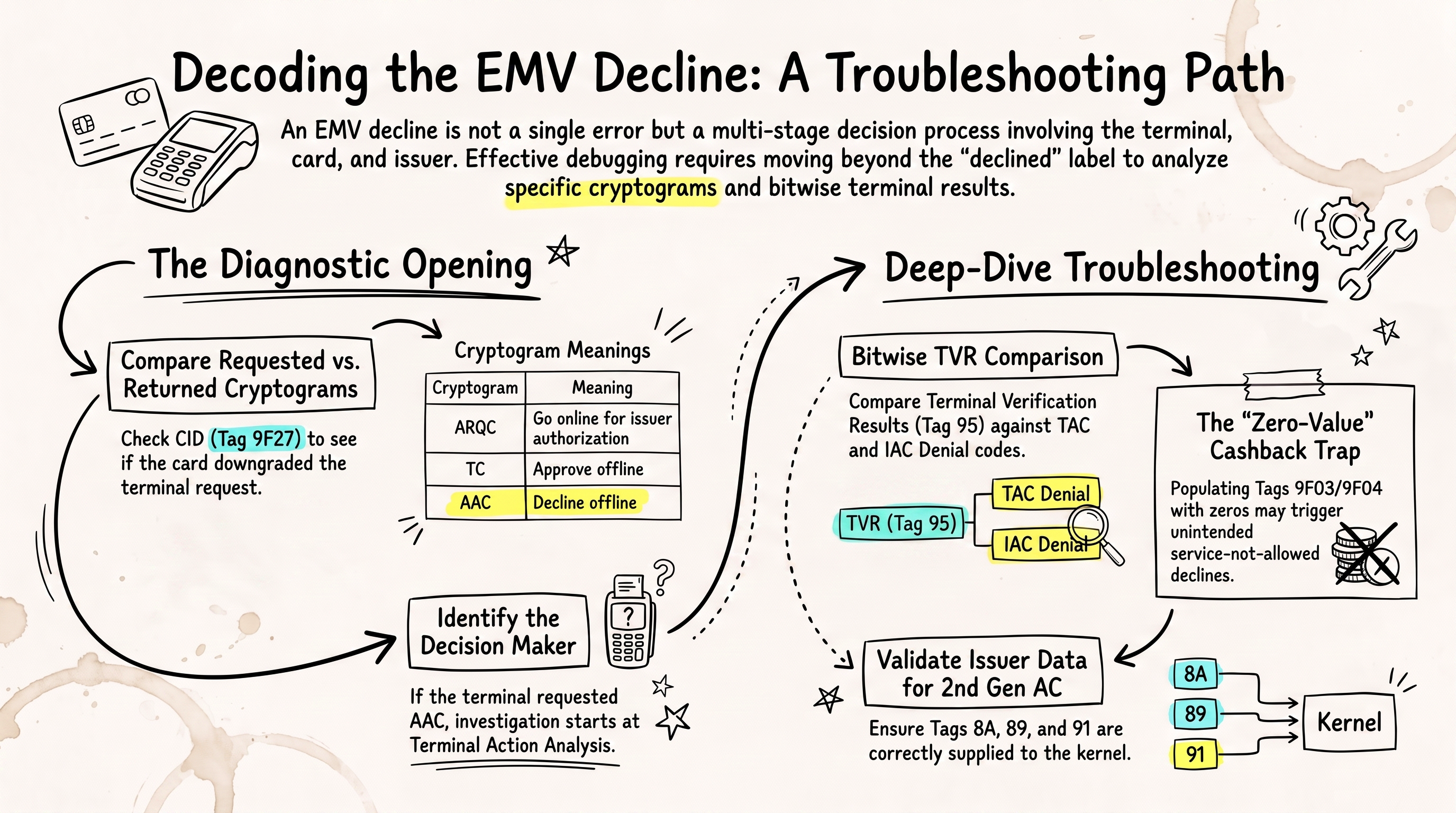
An EMV contact decline is not a single error. It is the outcome of decisions made by the terminal, the card, or the issuer at different stages of the transaction. Treating …

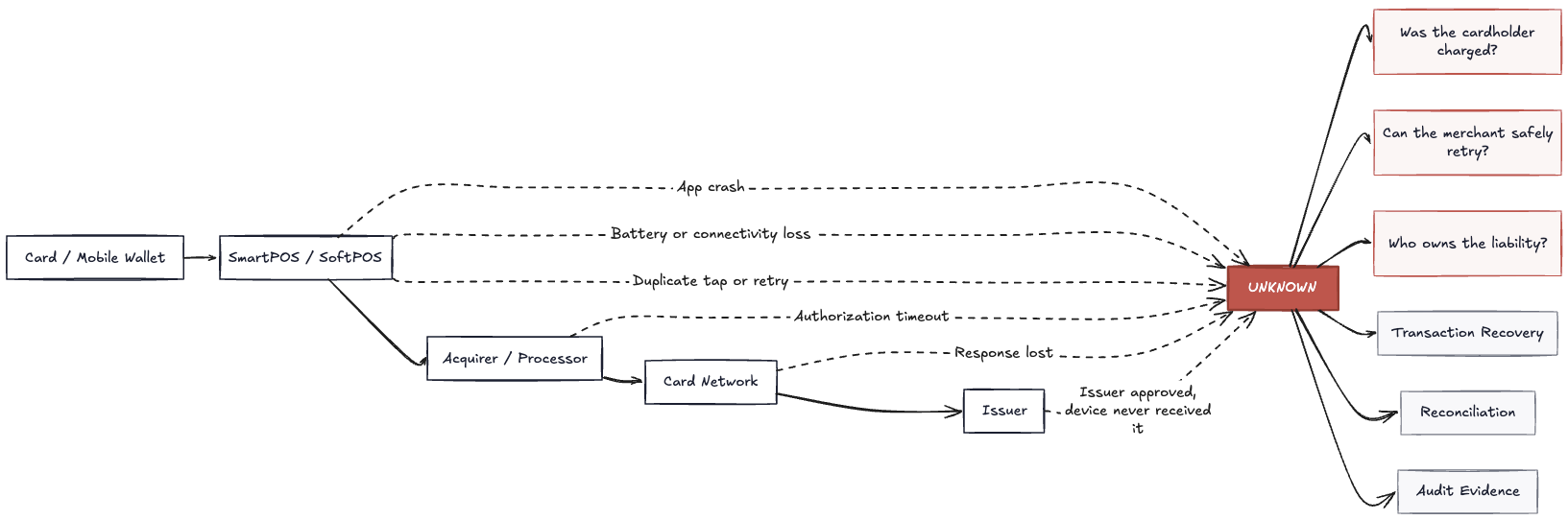
EMV authorization is the easy part. The hard problems are timeouts, retries, SoftPOS lifecycle gaps, store-and-forward declines, and the financial question that remains when two …

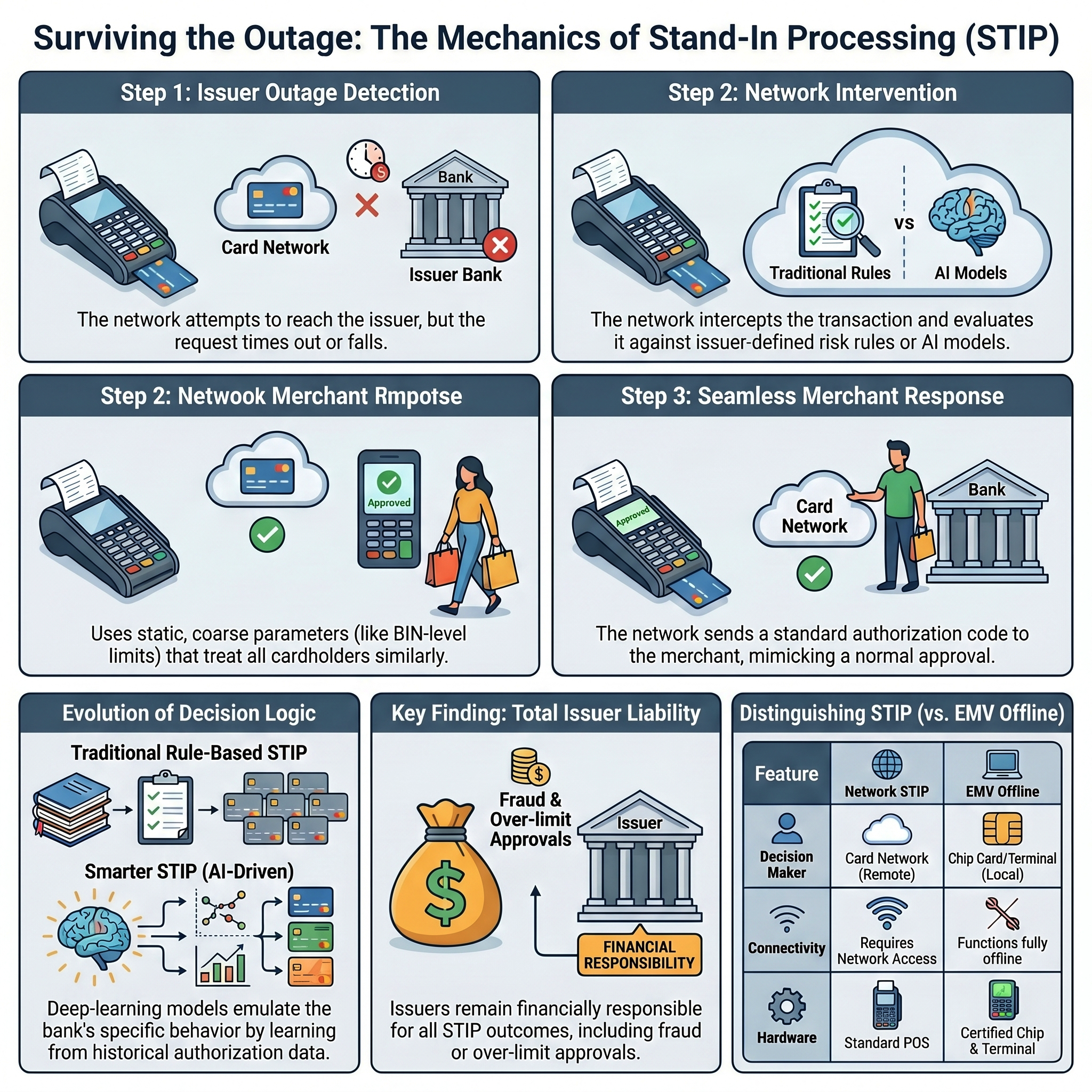
When an issuer or its processor drops offline, the POS does not always get a clean decline. The card scheme may stand in and approve or decline on the issuer’s behalf. The …

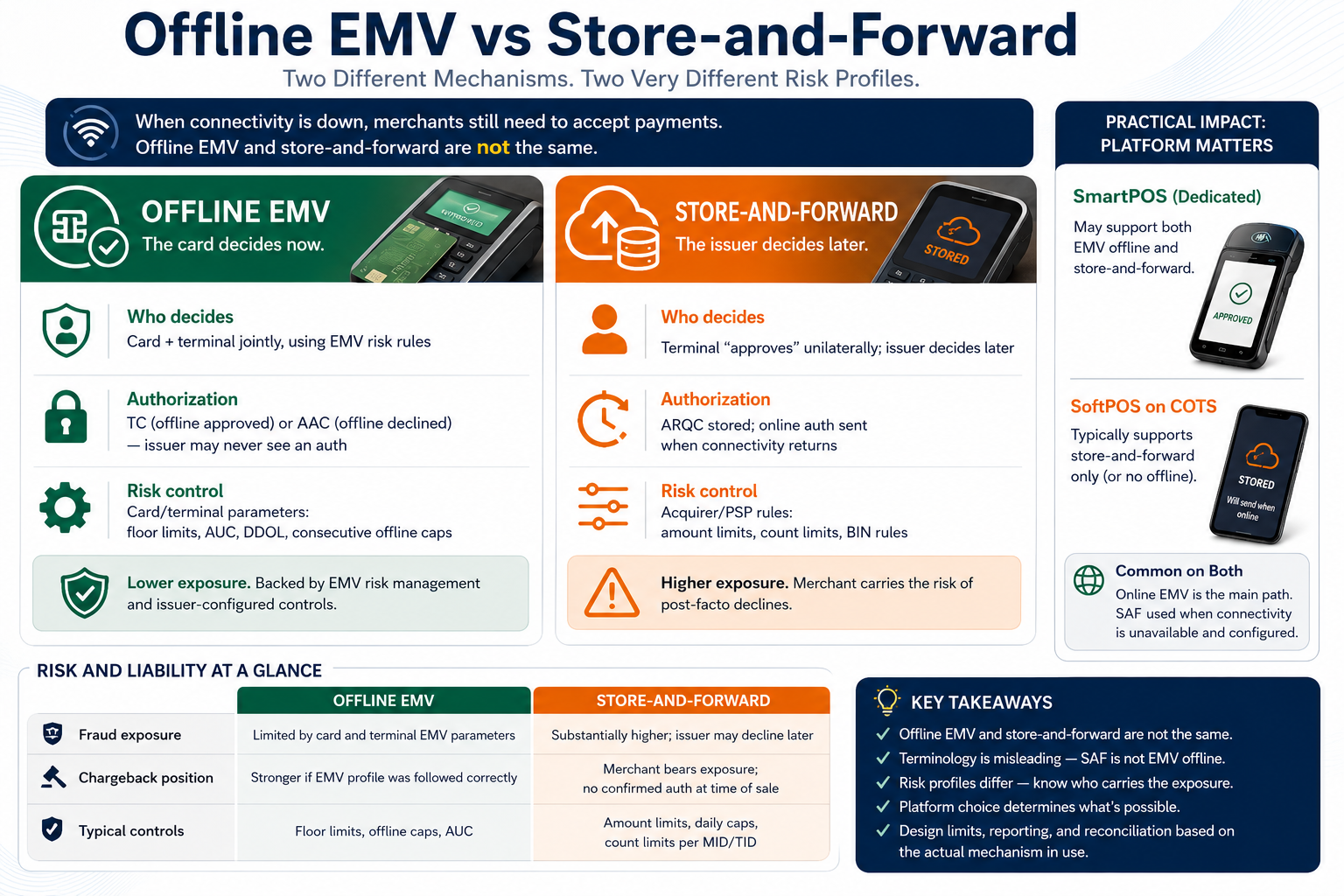
When a POS has no connectivity, merchants still need to accept payments. The industry uses terms like “offline transaction” and “offline processing” loosely …
When people talk about “L3 certification,” they often treat it as a single, uniform process. It isn’t. EMV Level 3 focuses on validating integration of the …