Every Payment Has a Liability Owner
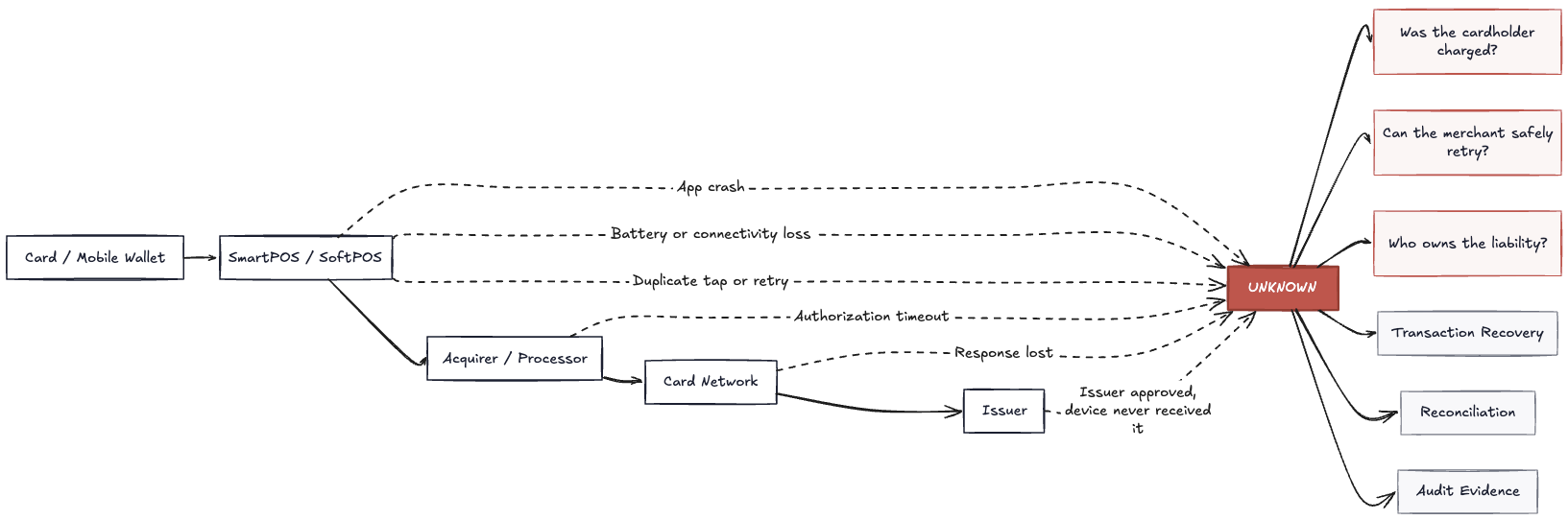
EMV authorization is the easy part. The hard problems are timeouts, retries, SoftPOS lifecycle gaps, store-and-forward declines, and the financial question that remains when two …

EMV authorization is the easy part. The hard problems are timeouts, retries, SoftPOS lifecycle gaps, store-and-forward declines, and the financial question that remains when two …

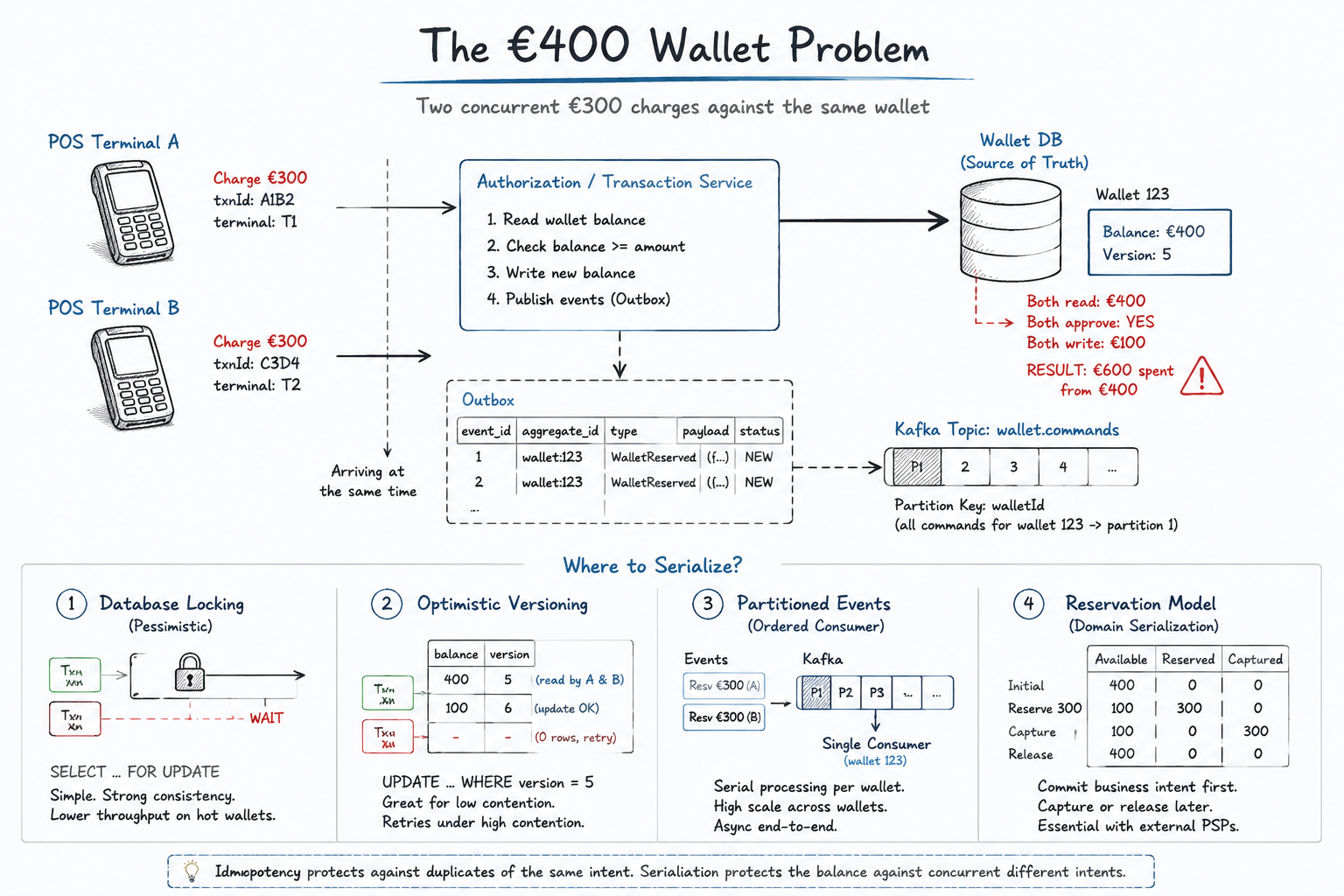
Two POS terminals charging the same benefit wallet at the same instant expose the classic lost-update problem. Four serialization strategies — pessimistic locks, optimistic …

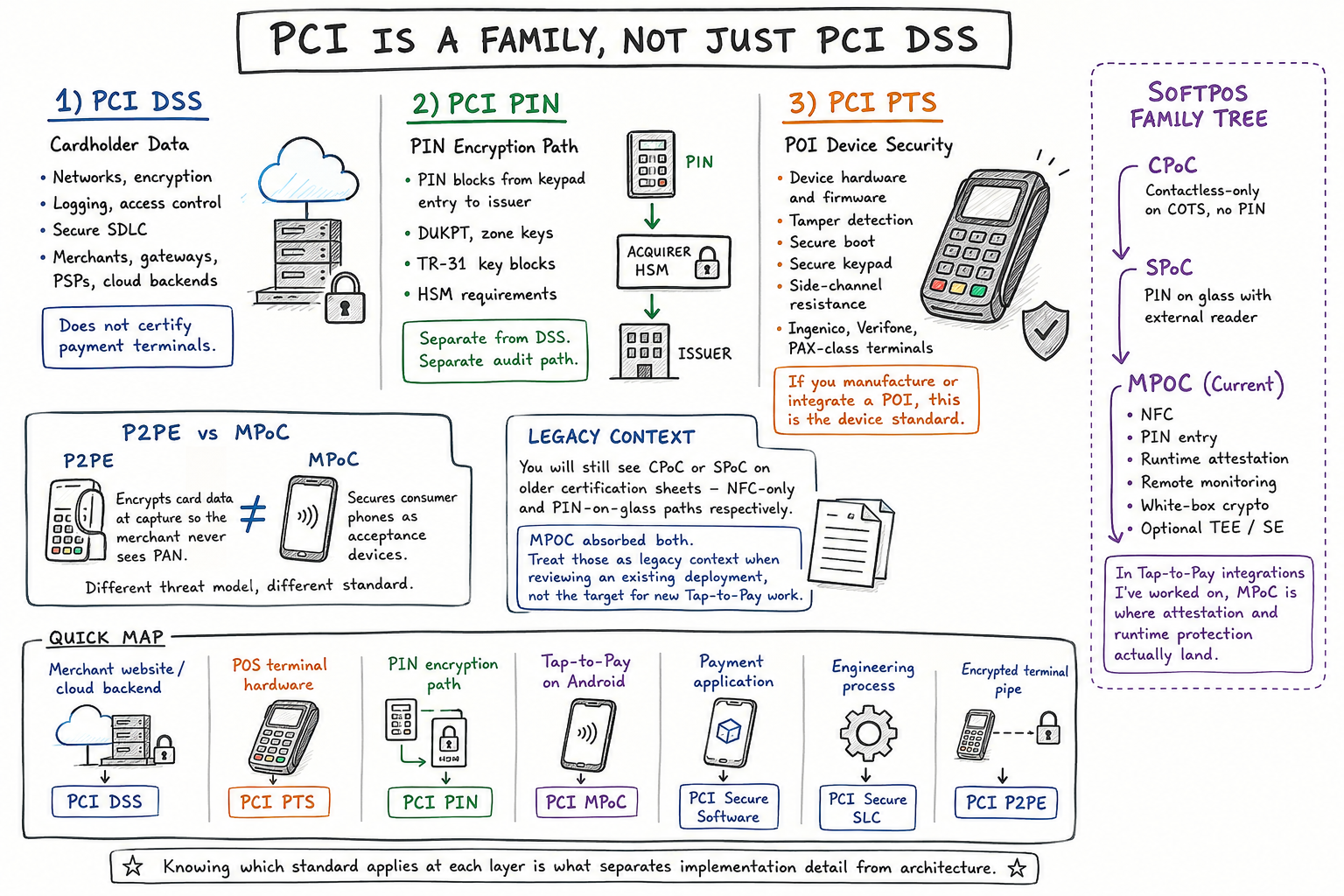
The PCI Security Standards Council publishes multiple standards — DSS, PIN, PTS, MPoC, P2PE, and more. Each maps to a different layer of the payment stack, and conflating them …

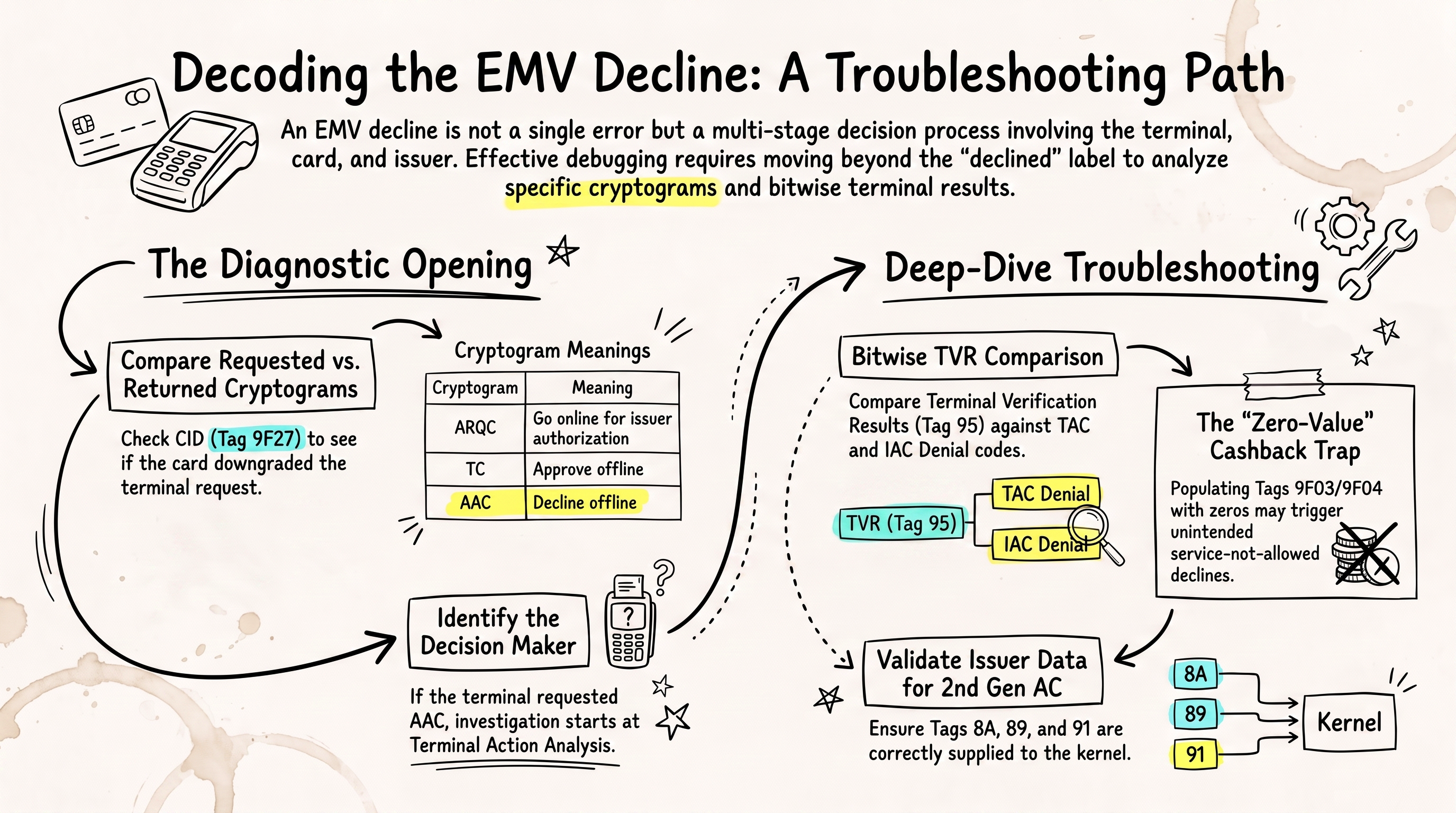
In EMV chip transactions, the card does not simply return “approved” or “declined” as plain text. It returns an application cryptogram: an 8-byte MAC bound to that transaction’s …

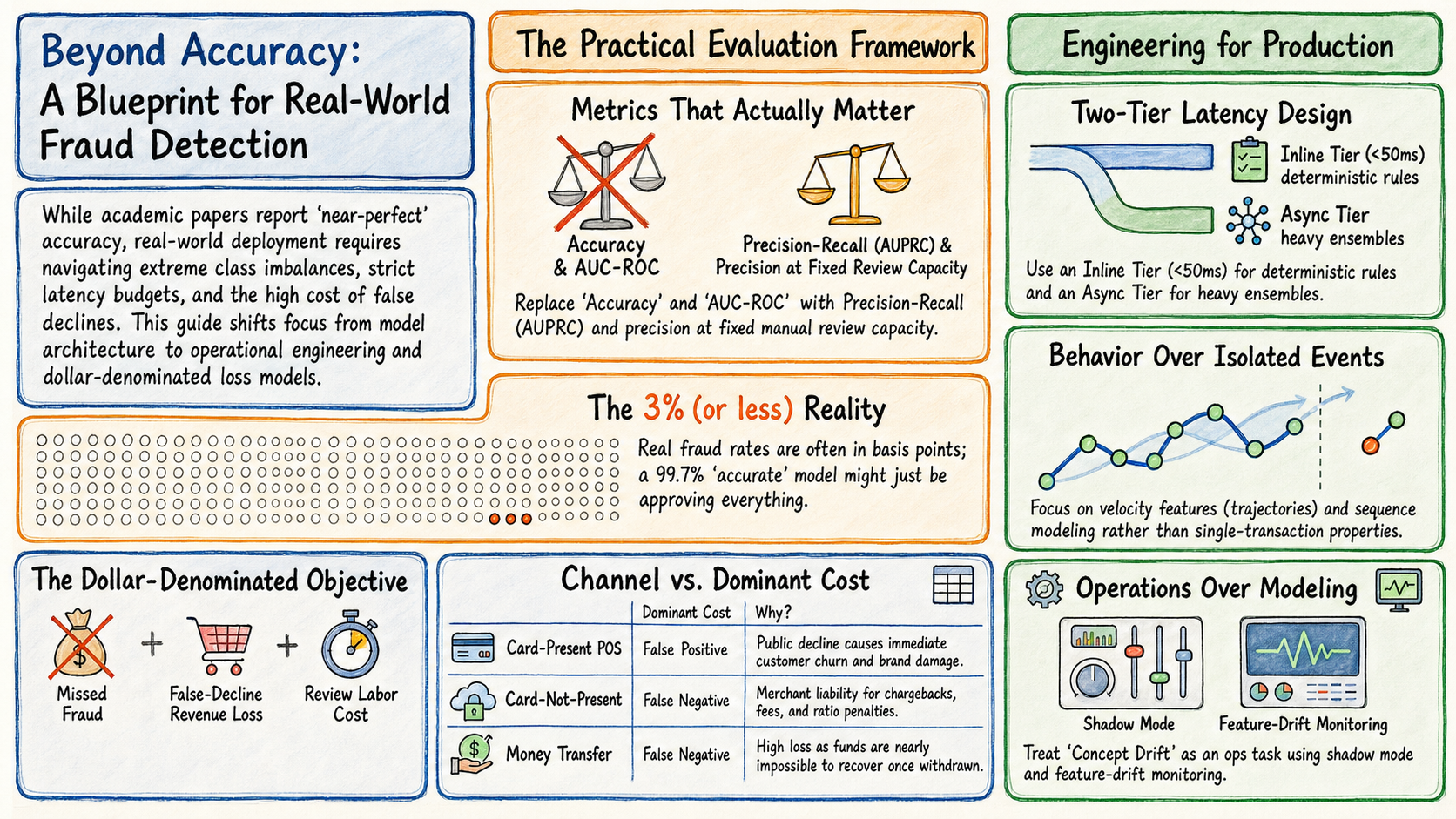
The next phase of AI in payments is not faster fraud scoring. It is AI moving from an advisory layer that observes the transaction to an actor that initiates payments and operates …

Manual capture is not about typing a card number by hand. It is the deliberate split of a card transaction into authorization and capture, managed as a backend state machine. Why …

A duplicate charge is rarely a coding bug. It is a distributed system losing certainty about whether an authorization already happened — and then guessing wrong. Why blind retries …

This is part 3 of a series on building grounded AI for payment systems. Part 1 made the case that payments need grounded AI, and part 2 Part 2covered the retrieval pattern that …

In the POS systems I have worked on, “is this terminal secure?” almost never has a hardware-only answer. The card read is one boundary. The PIN entry is another. So are …

This is part 2 of a series on building grounded AI for payment systems. Part 1 made the case that payments need grounded AI, not a generic LLM guessing from training data. This …