Multi-Agent Systems Scale Vertically. They Need to Scale Horizontally.
This post continues the ideas explored in Part I: Super Agents and Multi-Agent Communication and Part II: Swarm Intelligence. Those posts covered how agents coordinate within a …
This is Part II of a two-part series on multi-agent AI architecture. Part I covered the super agent pattern: centralized orchestration, structured communication, and a single …
A pattern I keep seeing on the bench goes like this. A prototype modem shows a clean spectrum, the signal sits well above the thermal noise floor, and the link budget says there is …
This is Part I of a two-part series on multi-agent AI architecture. This post covers centralized orchestration. Part II explores the opposite approach: swarm intelligence. …
A partial approval is not a decline and not a completed sale. ISO 8583 response codes and amount fields must be read together — and the terminal must not show a green APPROVED …
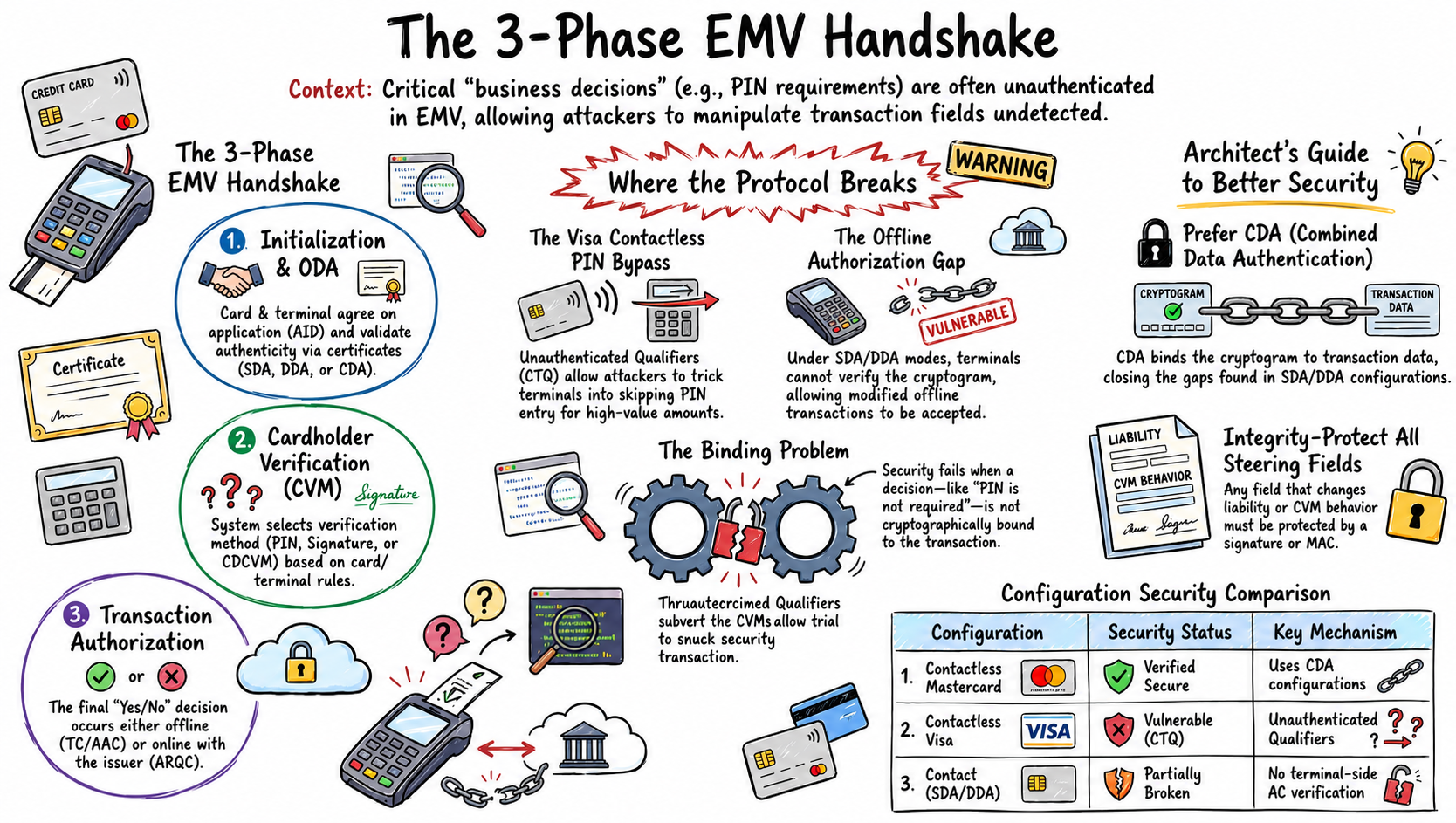
Online vs Offline EMV Transactions: Why Offline Still Matters In EMV payments, “online” and “offline” do not mean secure and insecure. They describe where the transaction decision …
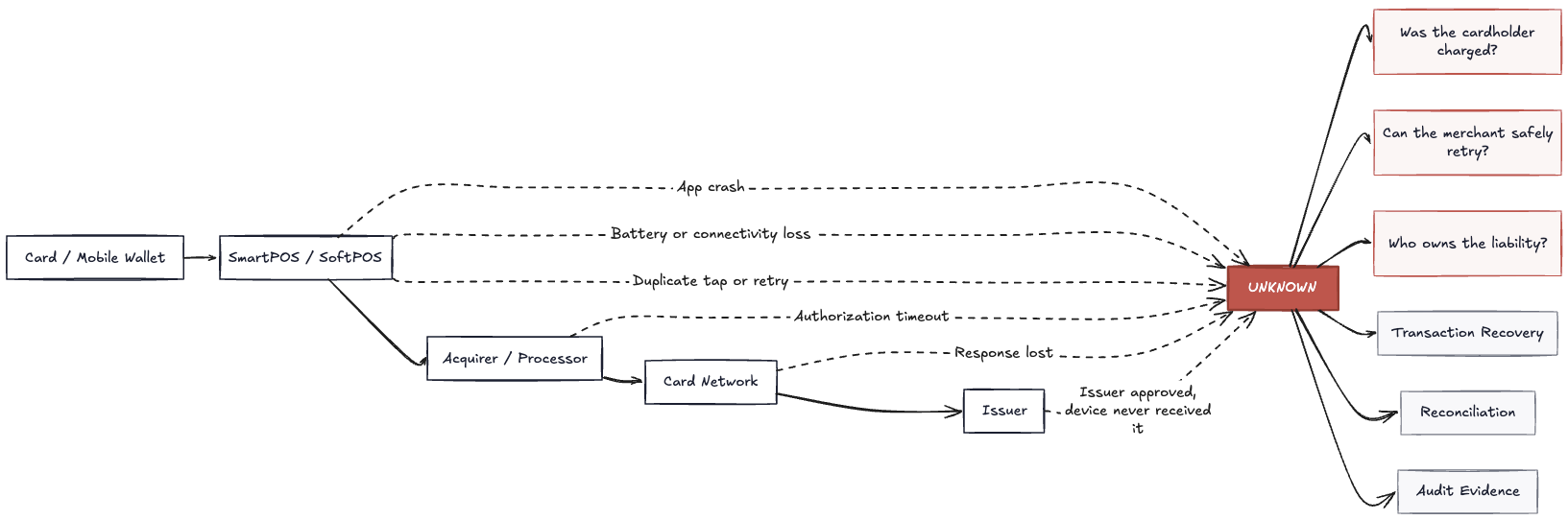
When an issuer or its processor drops offline, the POS does not always get a clean decline. The card scheme may stand in and approve or decline on the issuer’s behalf. The …
In a few short years, Large Language Models (LLMs) have moved from research labs into the core of how we work. They are no longer experimental novelties; they shape how we search, …
Every time you tap your phone at a terminal, add a card to an online merchant, or set up a recurring subscription, the system doesn’t use your actual card number. It uses a …
Old code isn’t the problem. Expired approvals are. Kernel lifecycle is really compliance alignment: whether the Level 2 (L2) kernel on your terminals still sits inside an …