The Hidden Mathematics of Multi-Agent AI: Why Agent Communication Does Not Scale Linearly
A simple counting formula explains why fully connected multi-agent systems become hard to control long before they become impressive.
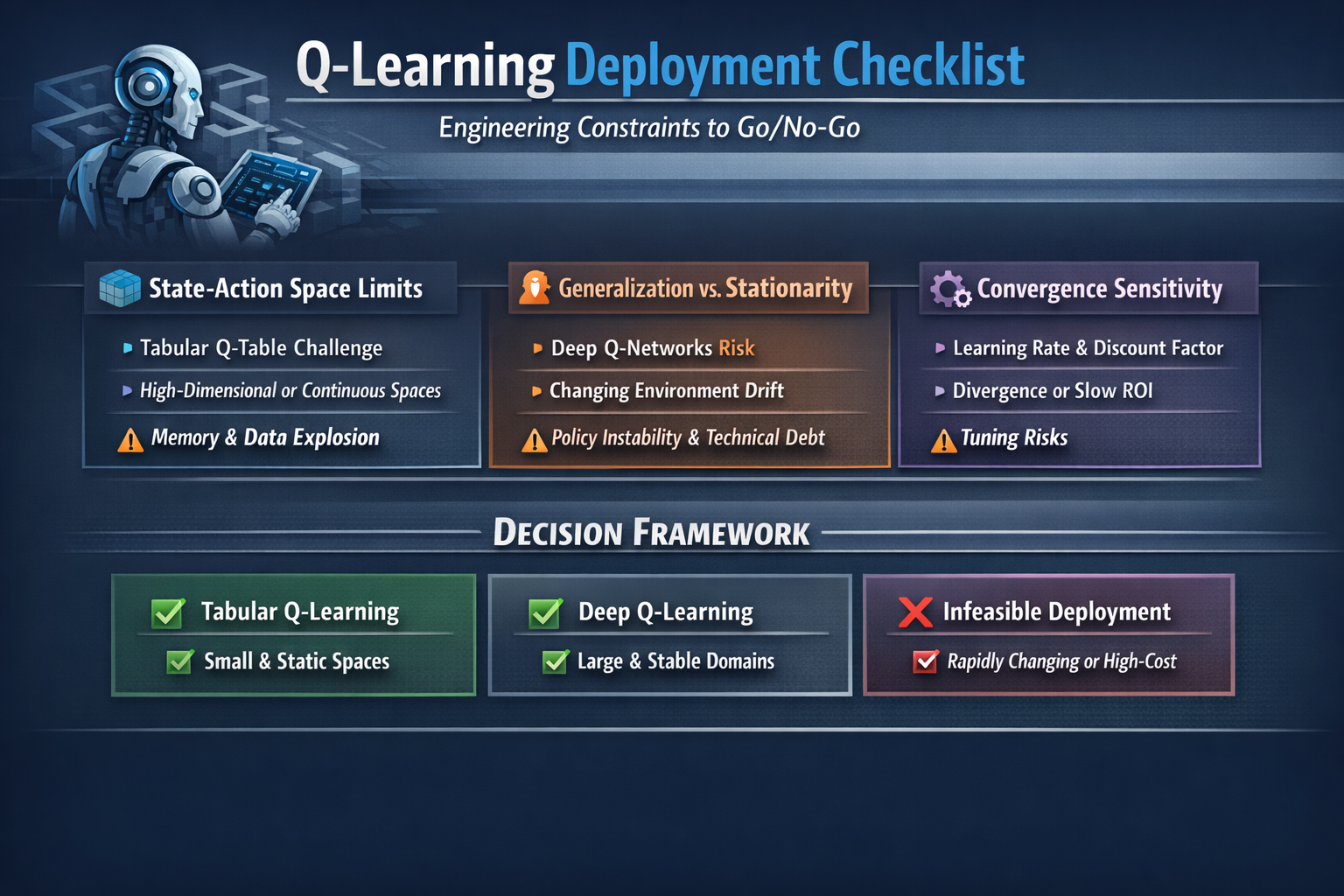
Q-learning for production decision systems: when tabular or deep Q-networks (DQN) make sense, state–action limits, stationarity, exploration cost, convergence risks—and when to say no. Reinforcement …
When you certify a SmartPOS terminal, the environment classification isn’t a minor detail — it’s a first-order architectural decision that determines CVM behavior, risk management rules, …
Types of POS Terminals, the Services They Offer, and Where They Fit Modern POS environments are built from a small number of terminal families, each tuned to a specific risk profile, user experience, …
Track 2 is the numeric-only magnetic-stripe data format defined in ISO/IEC 7813, with a maximum length of 40 characters. The discussion here complements the broader POS and EMV architecture material …
A Point-of-Sale (POS) system is the starting point of nearly every electronic payment. Although it looks simple to the end user — tap a card, enter a PIN, get a receipt — a POS is actually a secure, …
Welcome to Corebaseit — my blog on POS, EMV, payments, and AI. I’m Vincent Bevia. I work on payments at Multisafepay (part of Ant Group), and I’ve spent years in POS architecture, EMV, and …