ARQC, TC, and AAC: A Field Guide to EMV Application Cryptograms
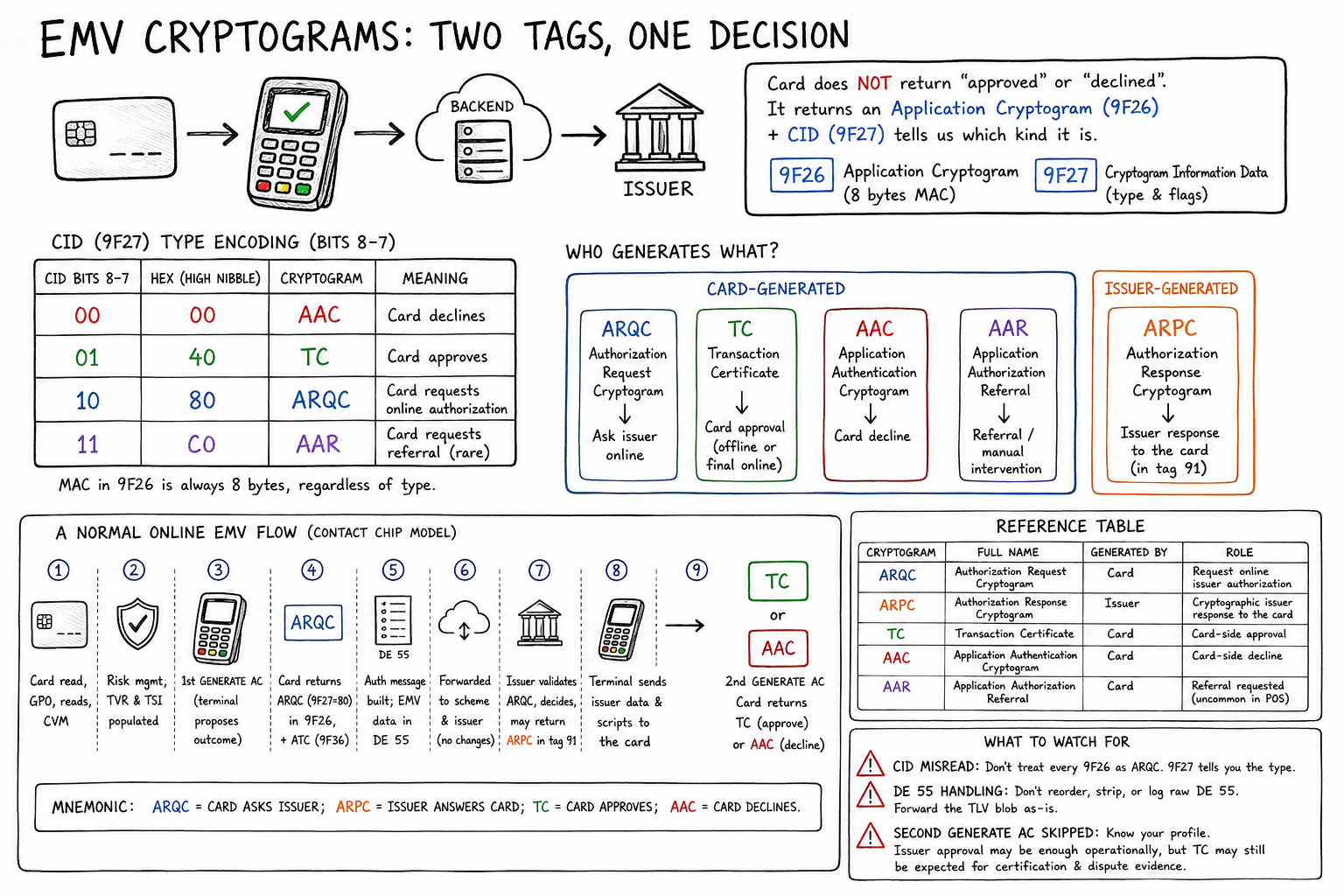
In EMV chip transactions, the card does not simply return “approved” or “declined” as plain text. It returns an application cryptogram: an 8-byte MAC bound to that transaction’s …


In EMV chip transactions, the card does not simply return “approved” or “declined” as plain text. It returns an application cryptogram: an 8-byte MAC bound to that transaction’s …
Every card-present transaction begins with a question the terminal must answer before anything else: is this card genuine?
Every chip card generates a unique cryptographic proof each time you tap or insert it. That proof is why cloning a chip card’s transaction capability is effectively …

I was listening to a podcast the other day about AI and the mathematics behind it — especially stochastic processes, entropy, and probability — and it immediately drew me in. With …

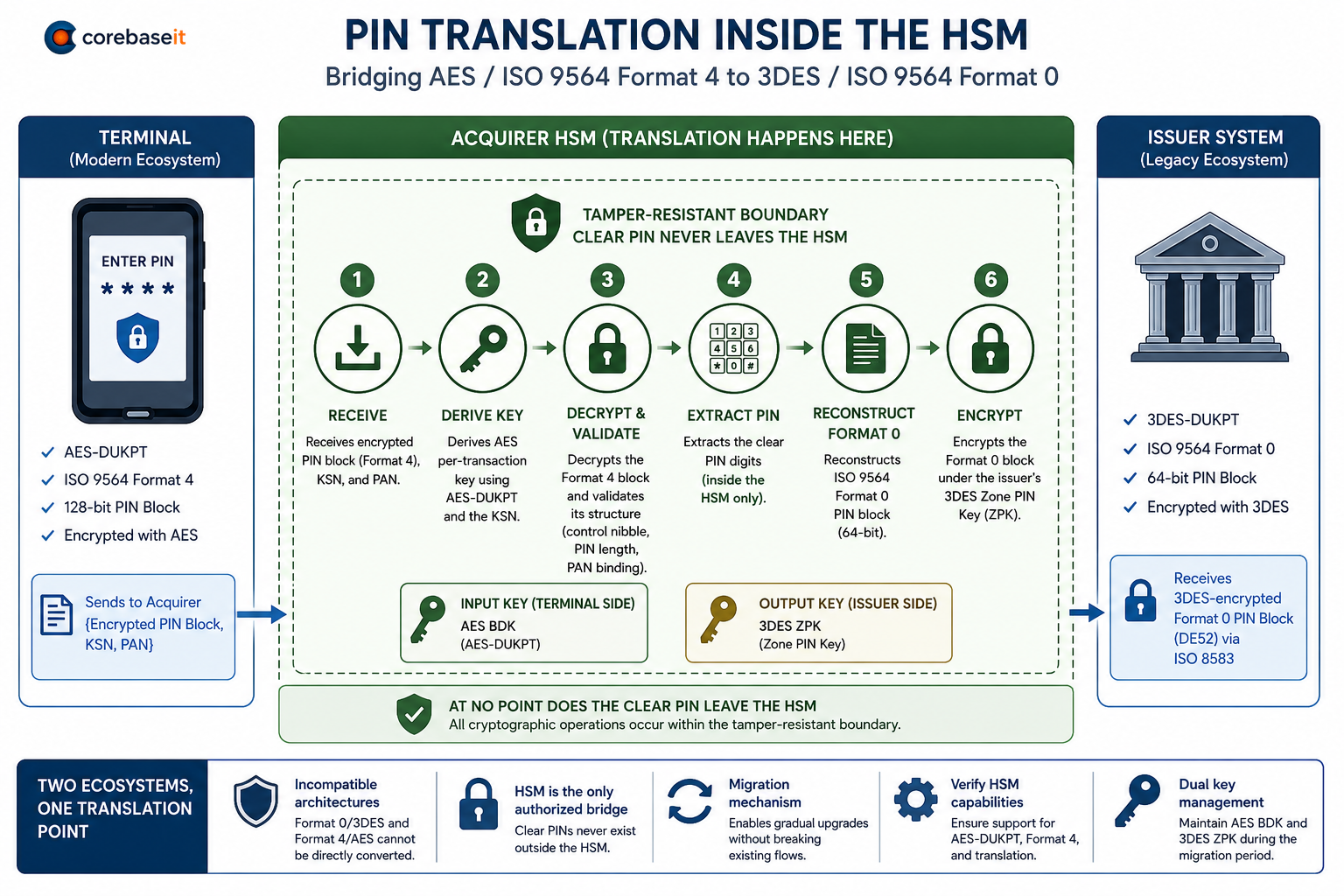
When a cardholder enters their PIN at a modern SmartPOS terminal, something subtle but critical happens behind the scenes. The terminal encrypts that PIN using AES and formats it …
Every time you tap or insert a chip card, the card generates a unique cryptogram — a cryptographic proof that this specific transaction is legitimate and hasn’t been seen …
Author: Vincent Bevia, MSc Computer Science — University of Liverpool Introduction RSA (Rivest–Shamir–Adleman) is one of the first public-key cryptosystems and is widely used for …