Spike First, ADR Second: Evidence and Rationale in System Design
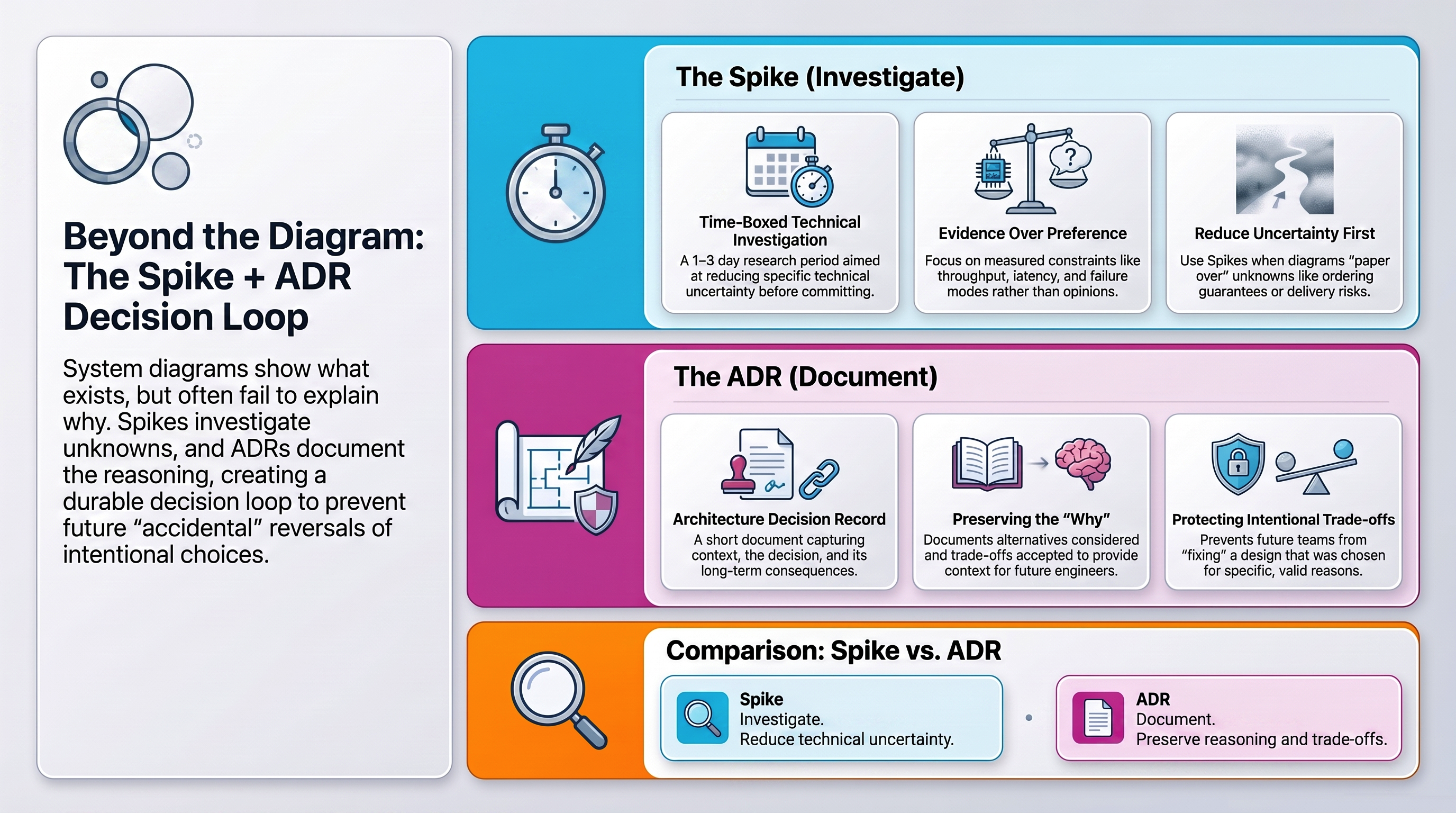
System design discussions often collapse into technology comparisons: Kafka or SQS, PostgreSQL or DynamoDB, synchronous or asynchronous, monolith or microservices. Those choices …
System design discussions often collapse into technology comparisons: Kafka or SQS, PostgreSQL or DynamoDB, synchronous or asynchronous, monolith or microservices. Those choices …
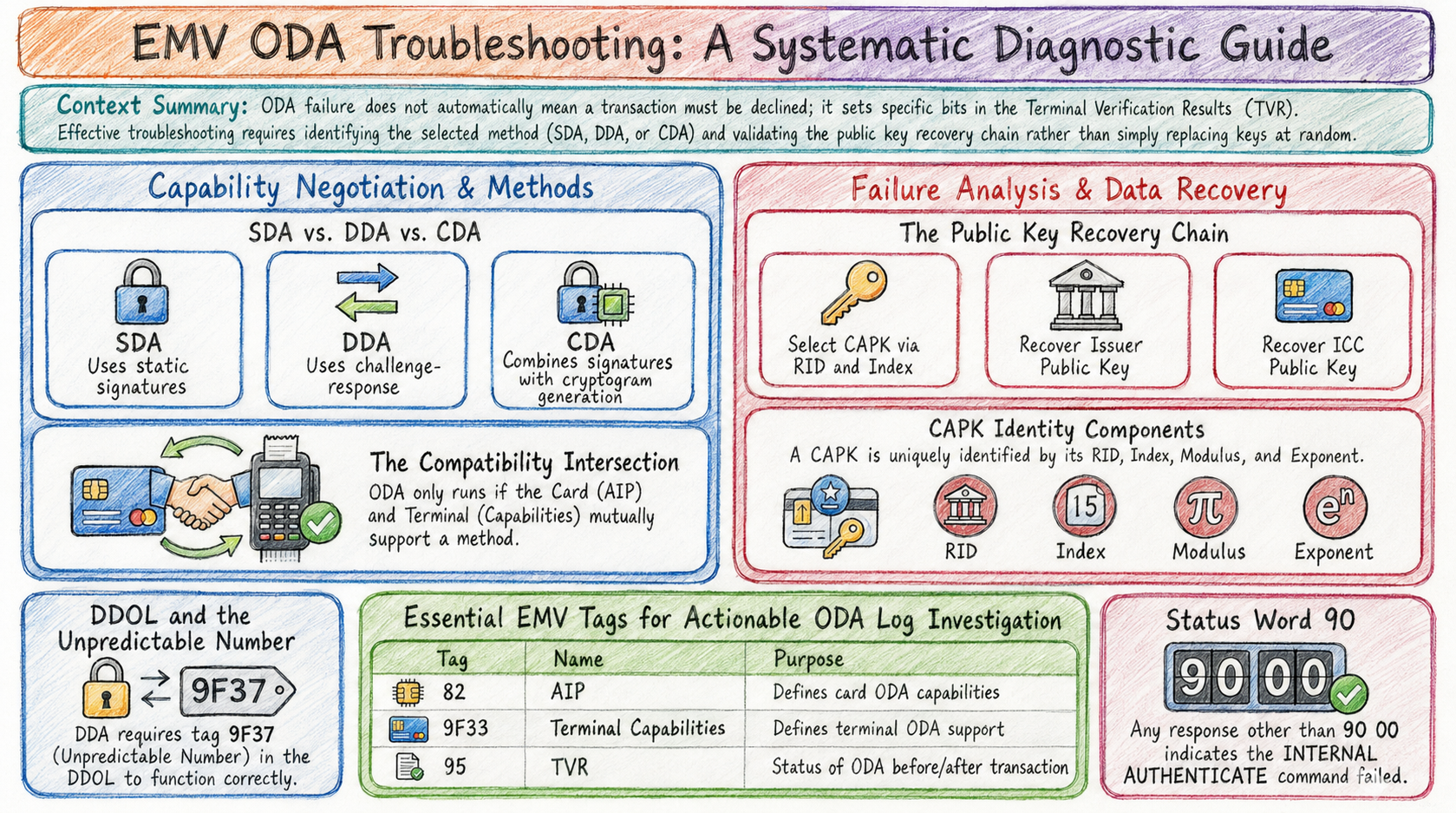
When Offline Data Authentication (ODA) fails, replacing Certification Authority Public Keys (CAPKs) at random is rarely productive. Most field failures sit earlier in the chain: …

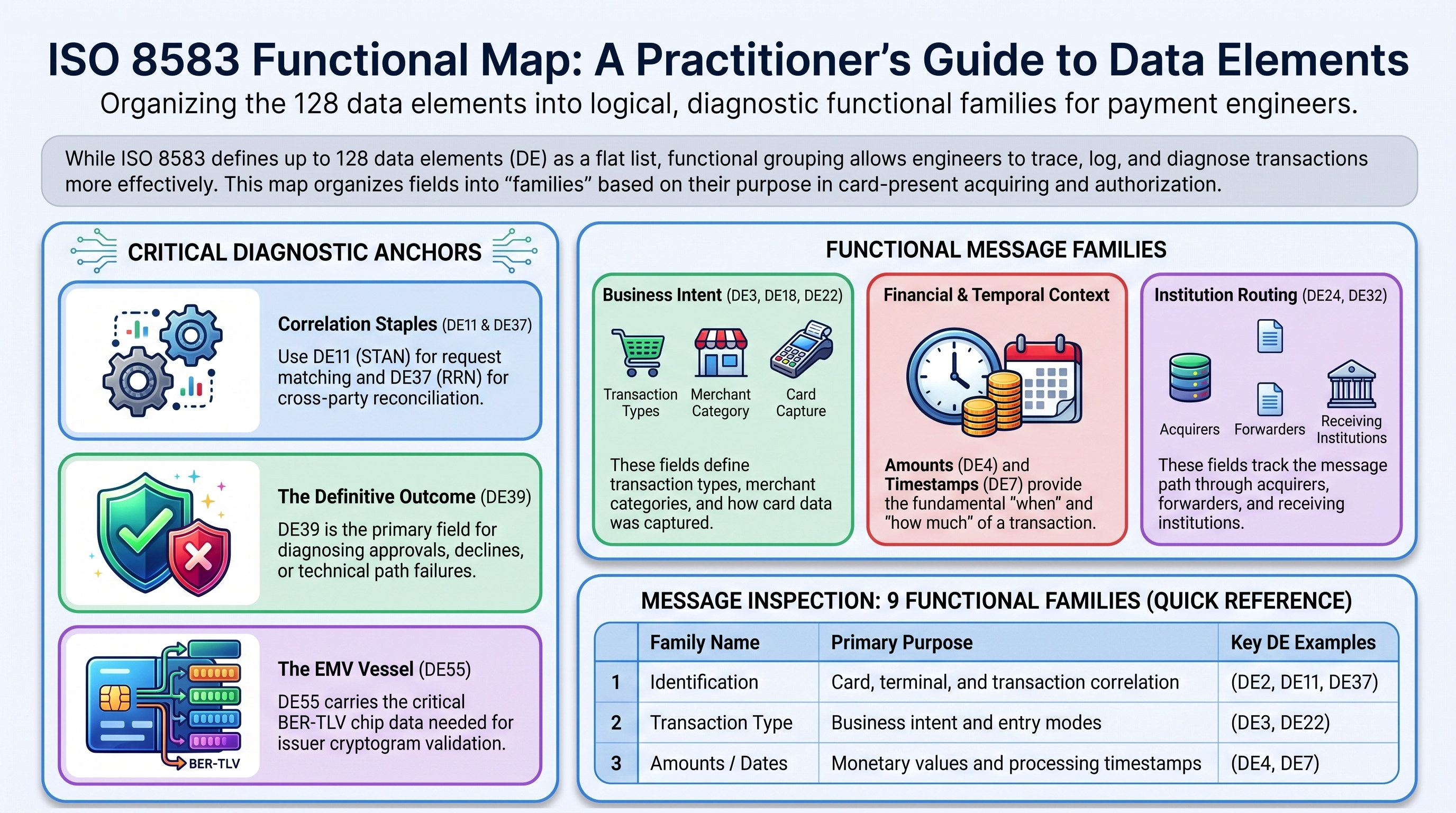
ISO 8583 defines up to 128 data element positions. Treated as a flat numbered list, they are hard to reason about. Grouped by function — the way working engineers already inspect …

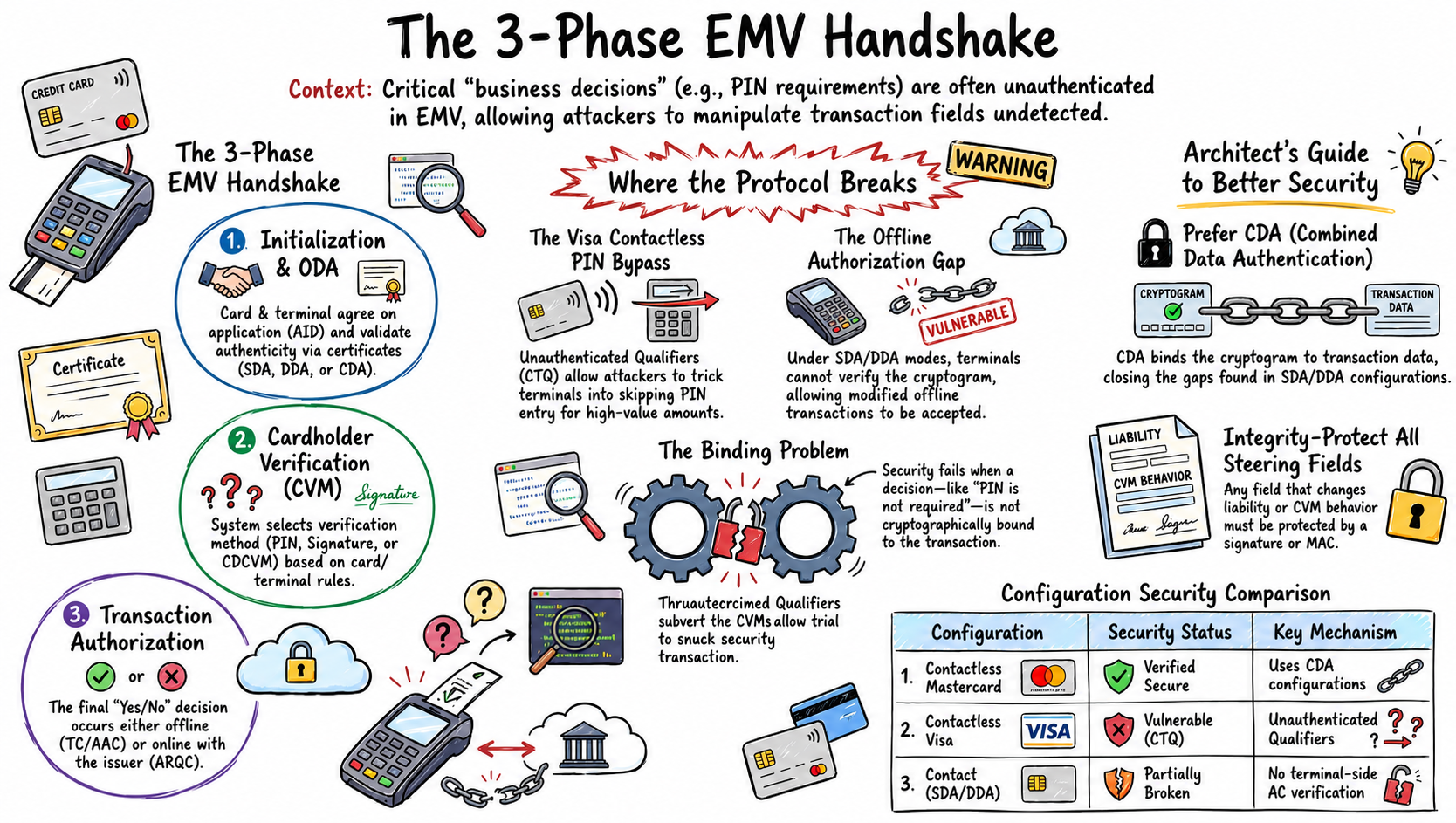
EMV is often treated as a solved security problem. Billions of cards, decades of deployment, and strong cryptography create the impression that the protocol is fundamentally sound …

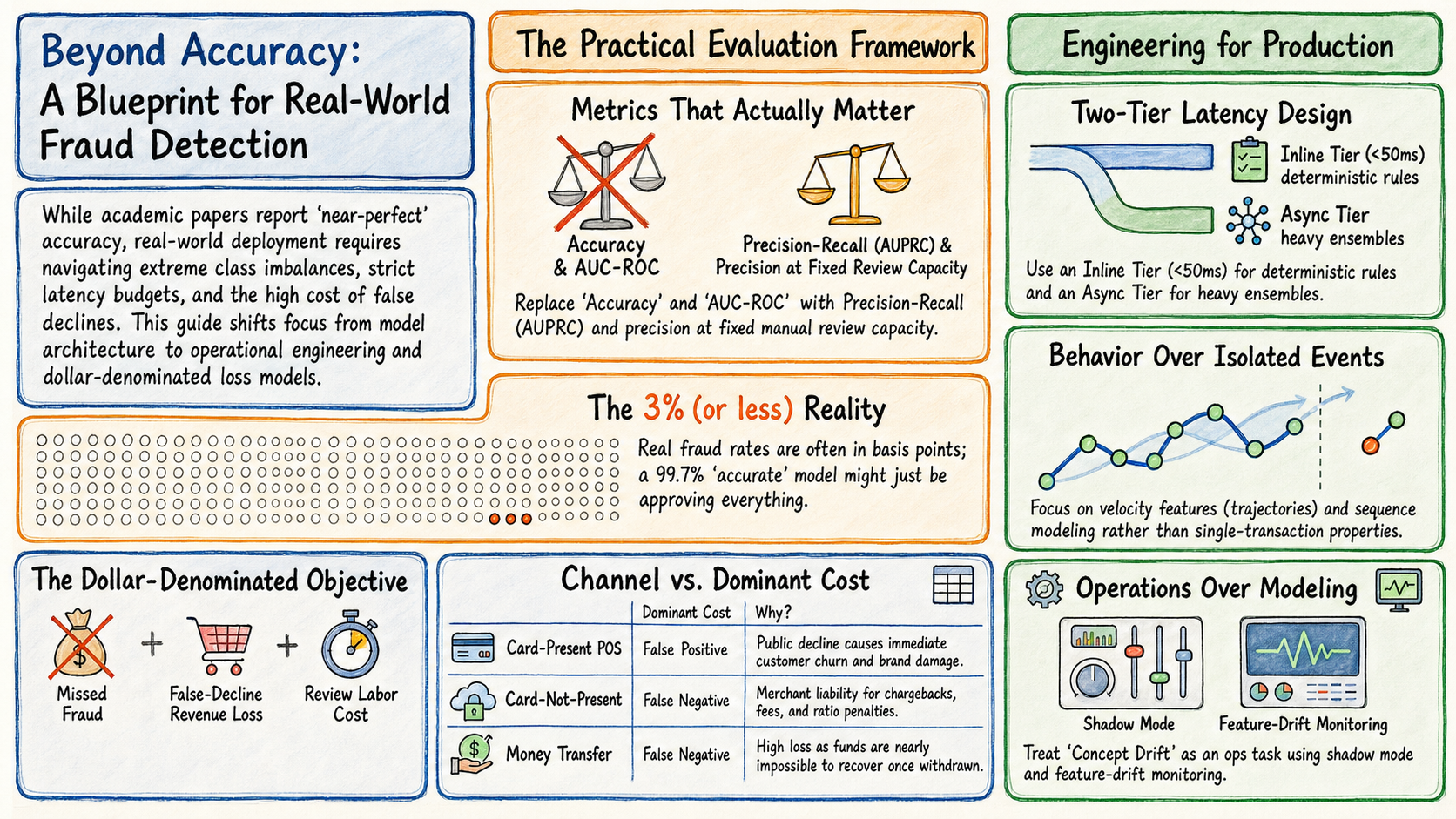
Fraud-detection papers regularly report near-perfect accuracy on public datasets. Almazroi and Ayub’s 2023 IEEE Access paper is a recent example: a ResNeXt-embedded GRU …

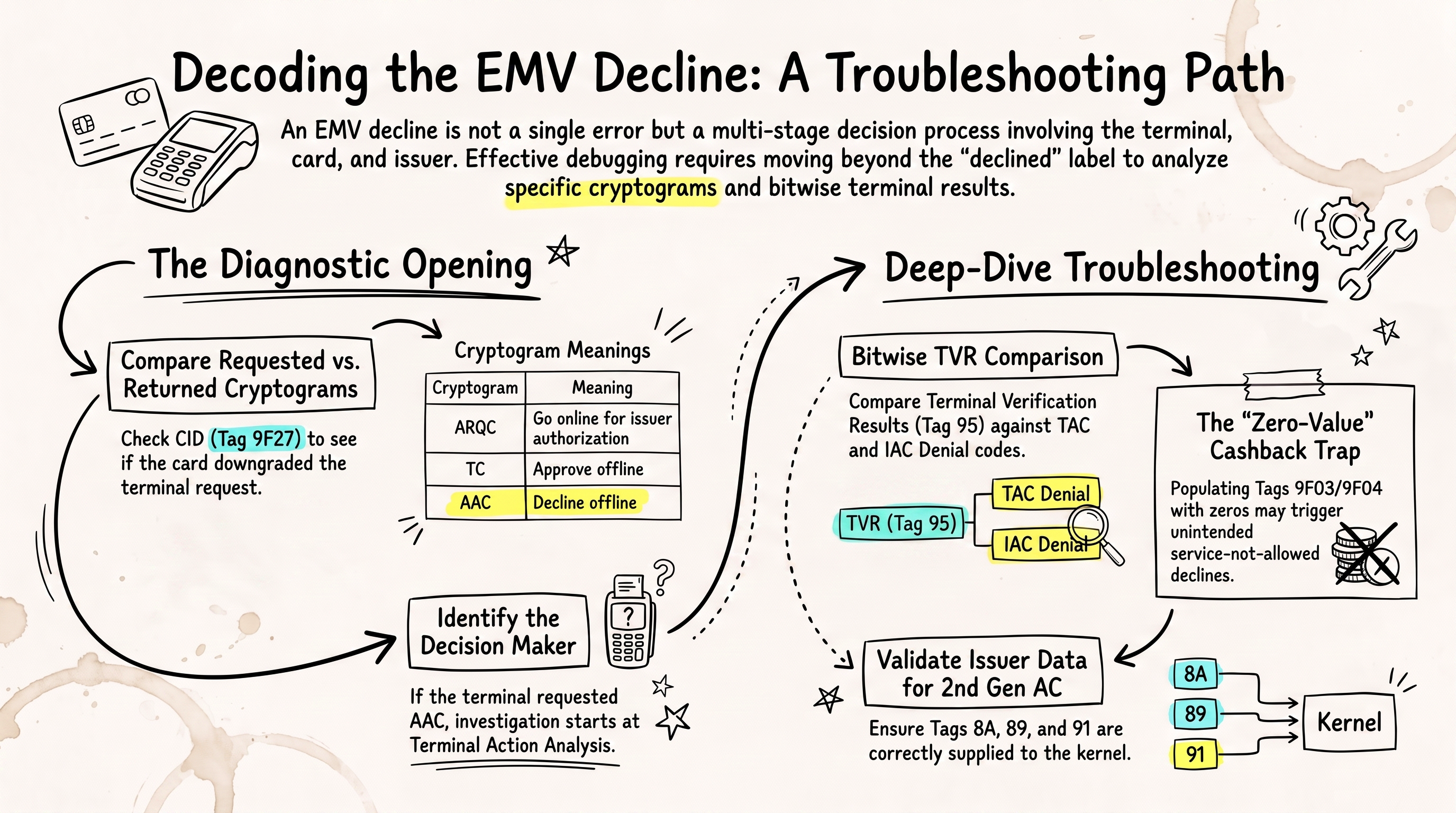
An EMV contact decline is not a single error. It is the outcome of decisions made by the terminal, the card, or the issuer at different stages of the transaction. Treating …

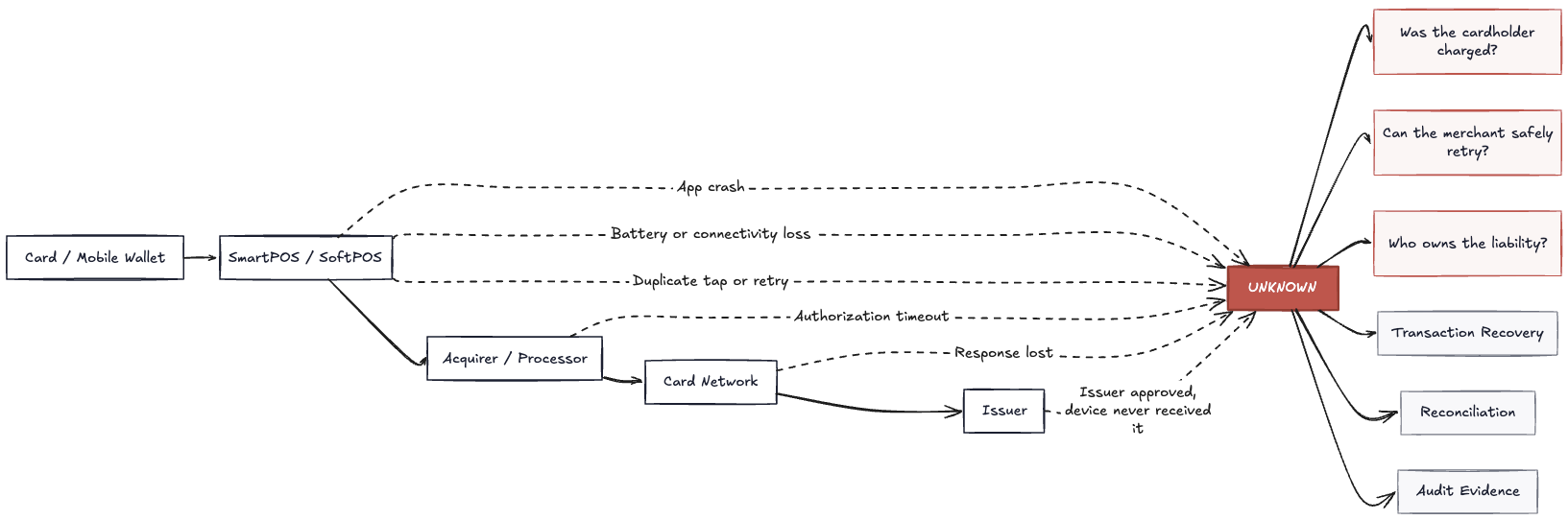
EMV authorization is the easy part. The hard problems are timeouts, retries, SoftPOS lifecycle gaps, store-and-forward declines, and the financial question that remains when two …

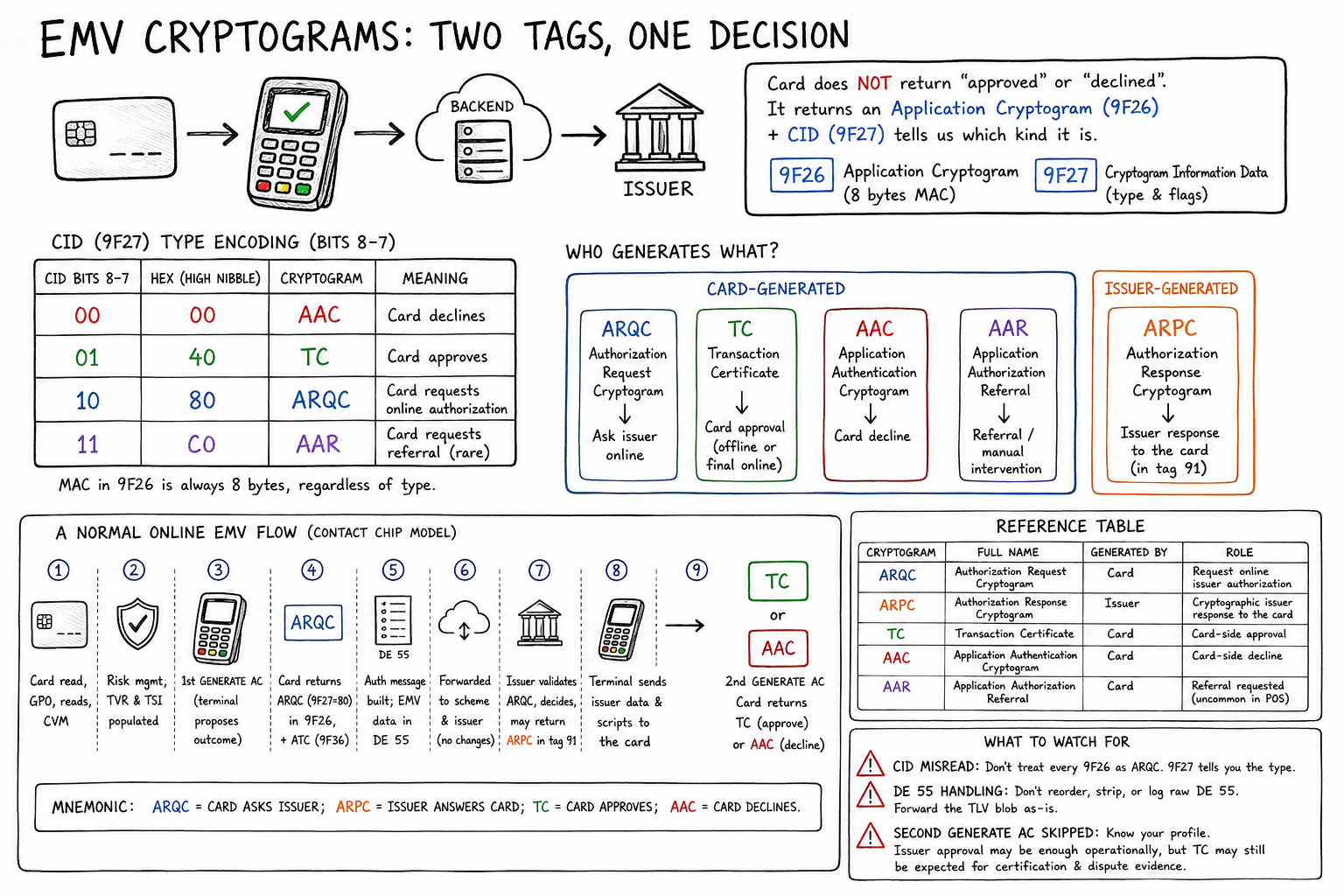
In EMV chip transactions, the card does not simply return “approved” or “declined” as plain text. It returns an application cryptogram: an 8-byte MAC bound to that transaction’s …

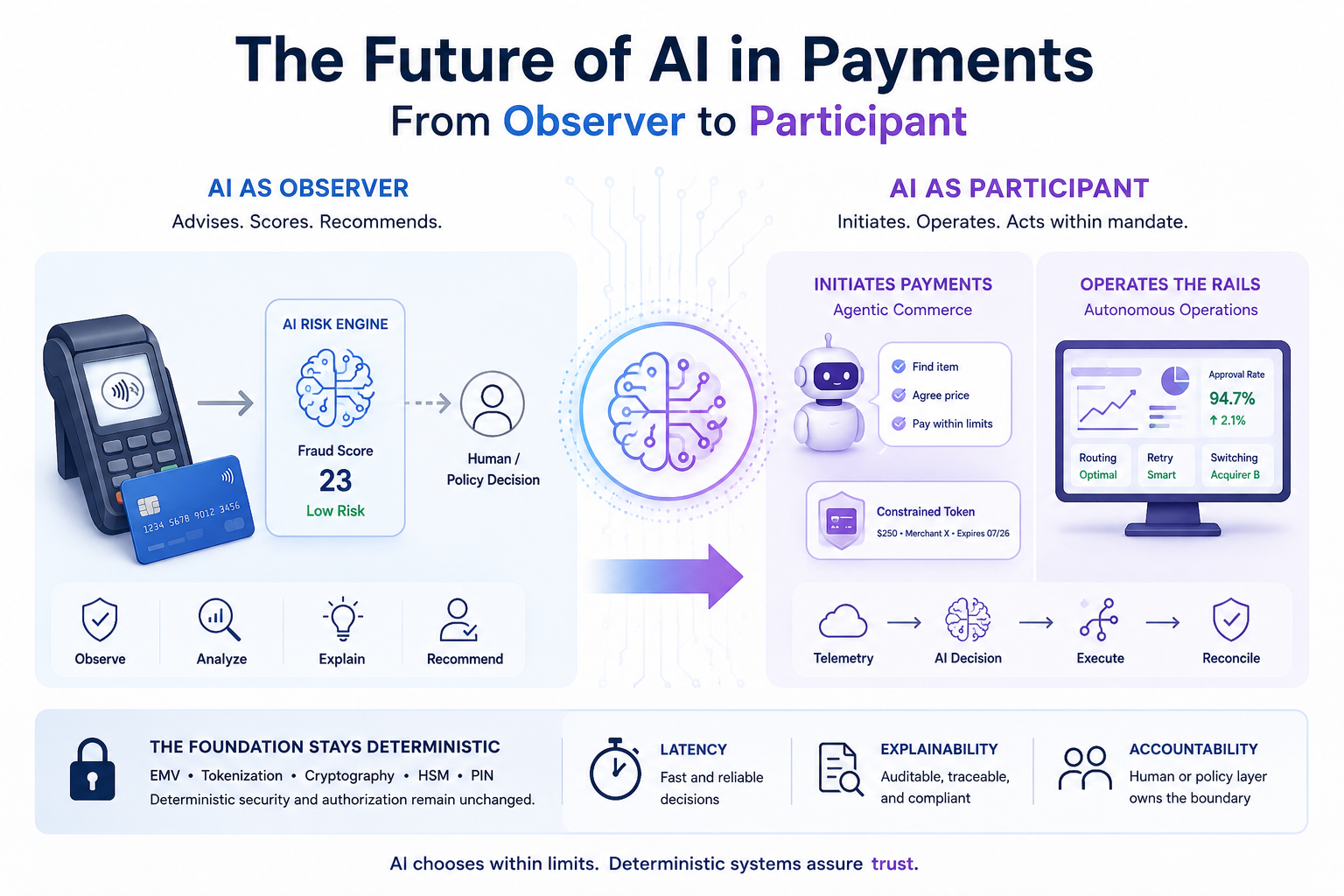
The next phase of AI in payments is not faster fraud scoring. It is AI moving from an advisory layer that observes the transaction to an actor that initiates payments and operates …

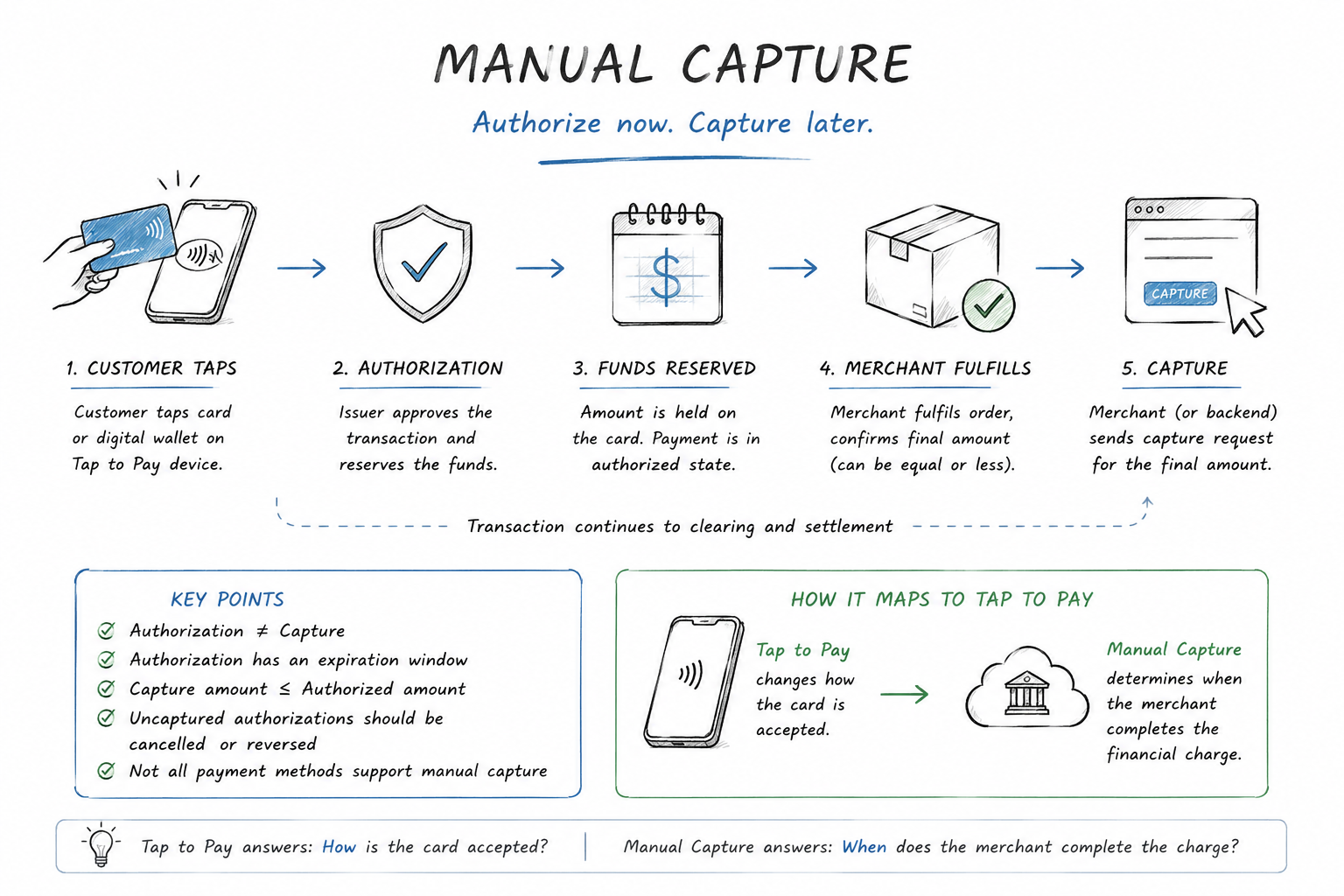
Manual capture is not about typing a card number by hand. It is the deliberate split of a card transaction into authorization and capture, managed as a backend state machine. Why …