5 min read
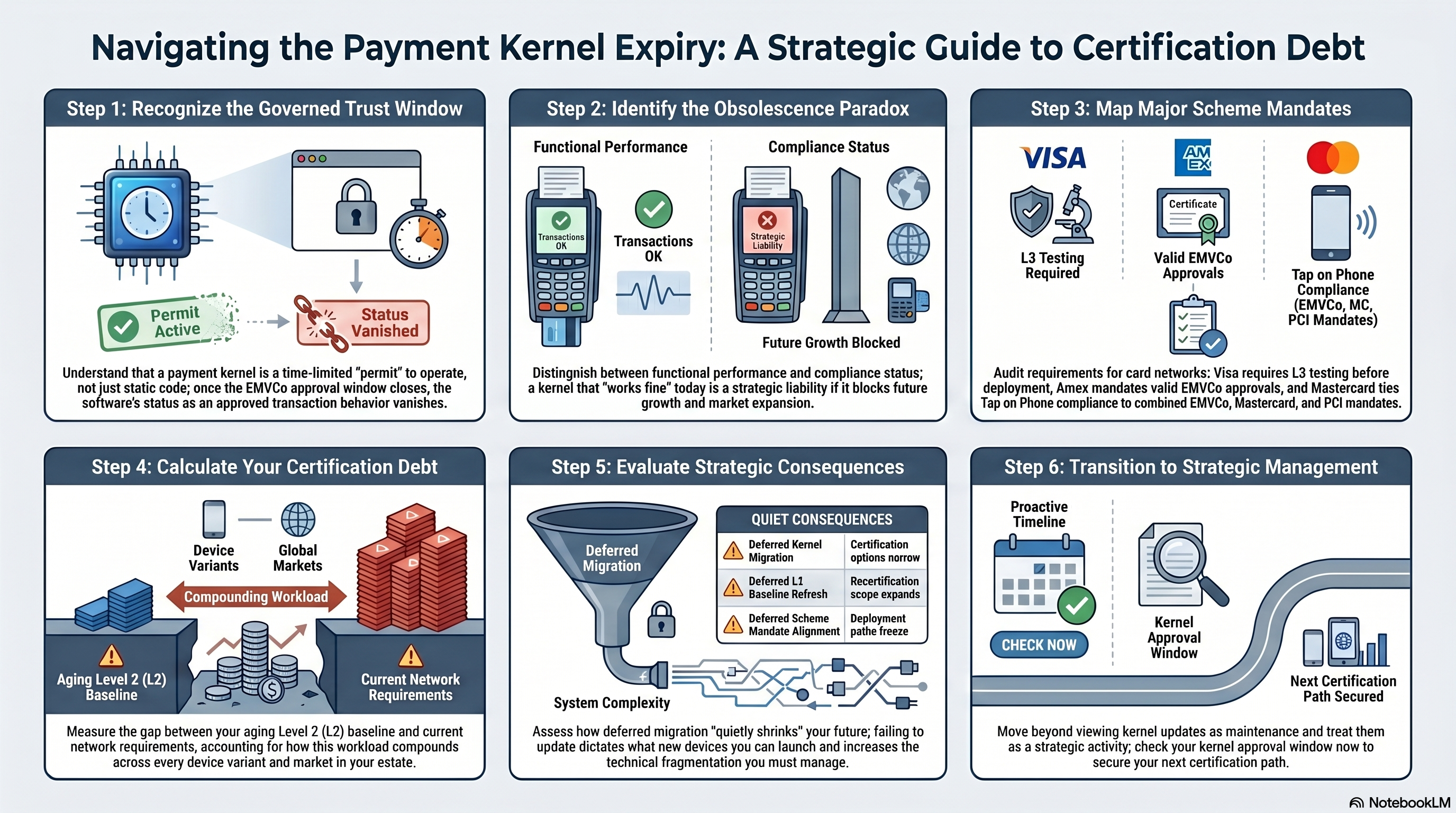
Old code isn't the problem. Expired approvals are
Old code isn’t the problem. Expired approvals are. Kernel lifecycle is really compliance alignment: whether the Level 2 (L2) kernel on your terminals still sits inside an …
Old code isn’t the problem. Expired approvals are. Kernel lifecycle is really compliance alignment: whether the Level 2 (L2) kernel on your terminals still sits inside an …
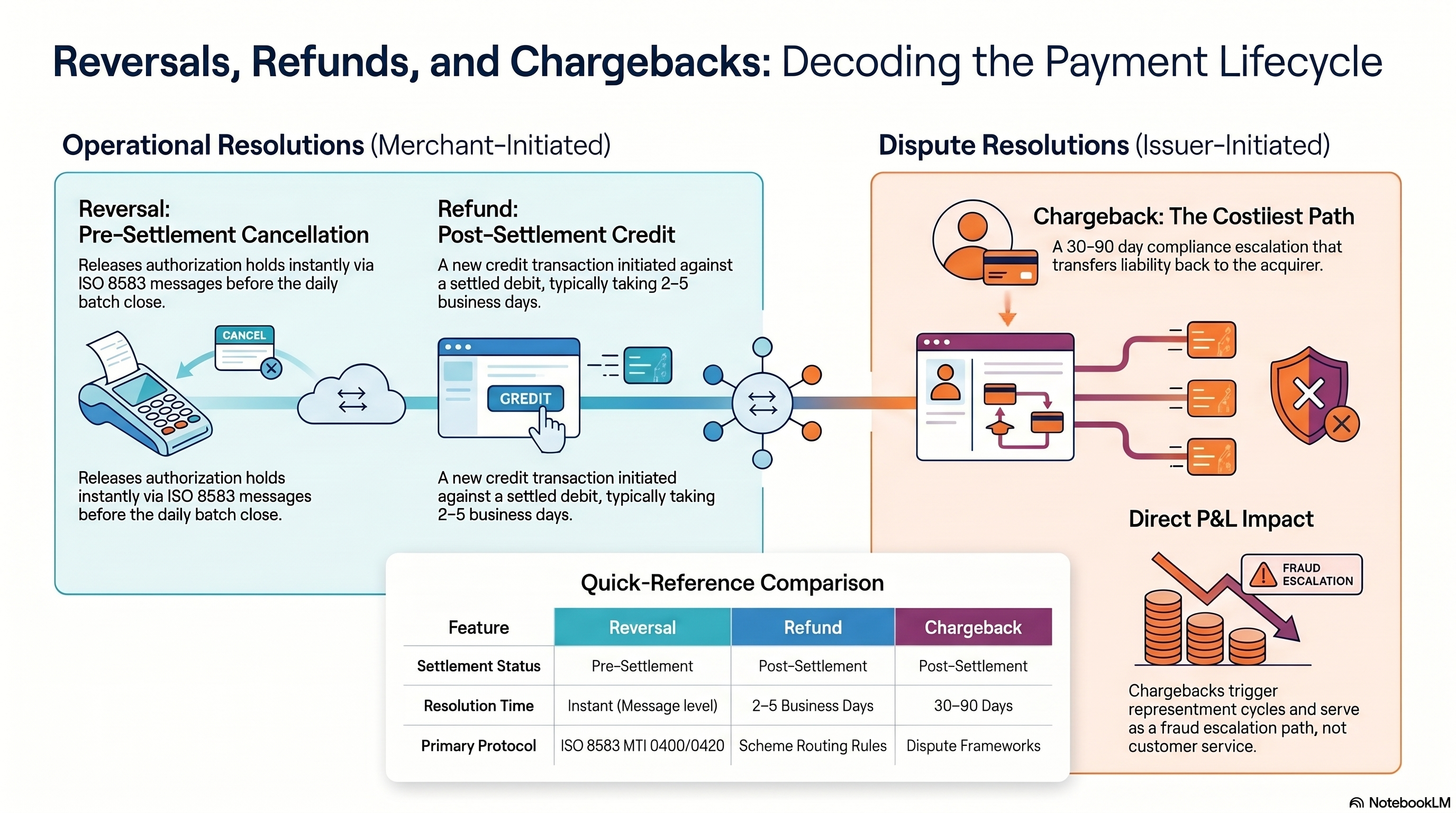
Three words every payment professional uses — and confuses. Each lives at a different point in the settlement lifecycle, under a different protocol, with radically different …
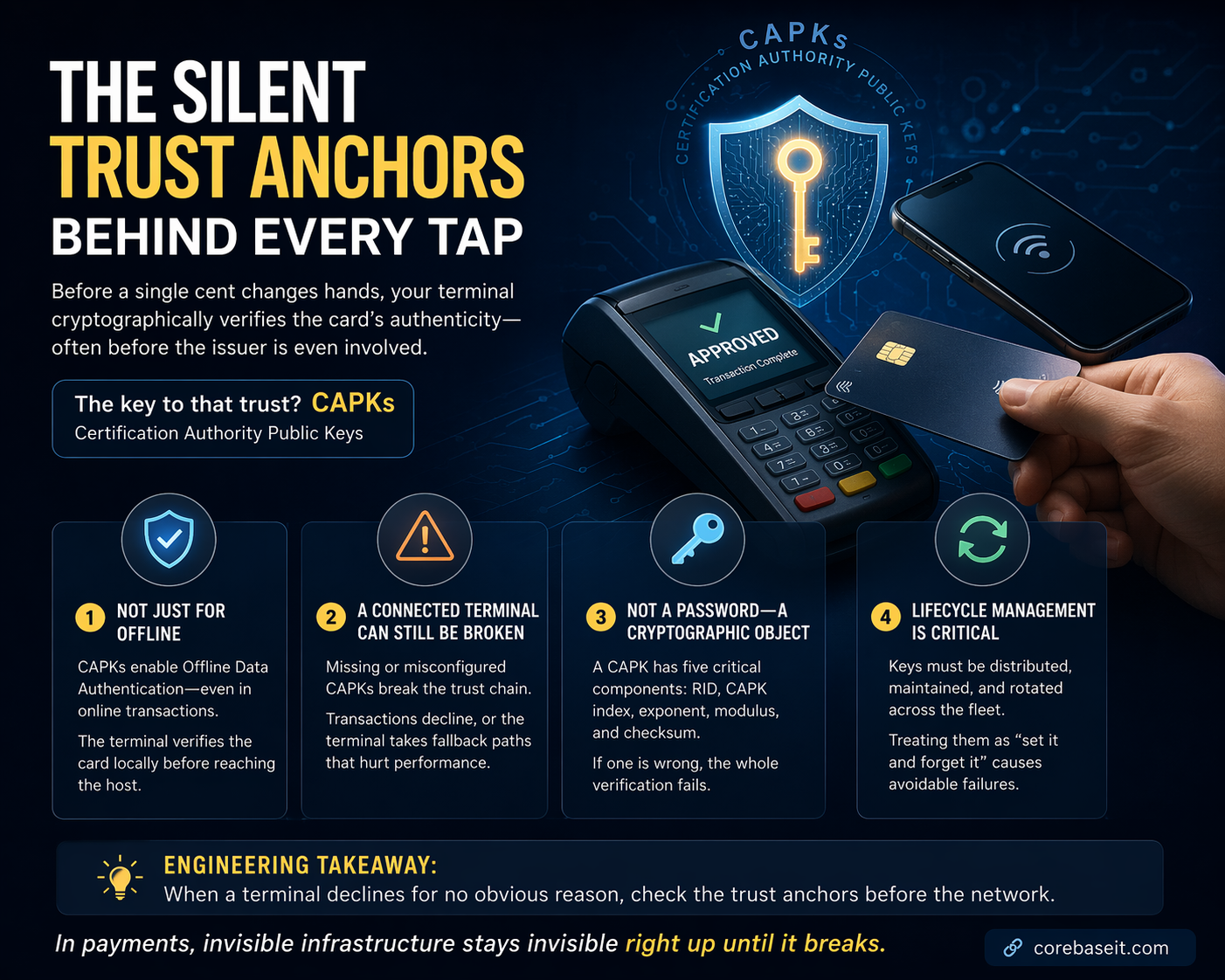
Every card-present transaction begins with a question the terminal must answer before anything else: is this card genuine?
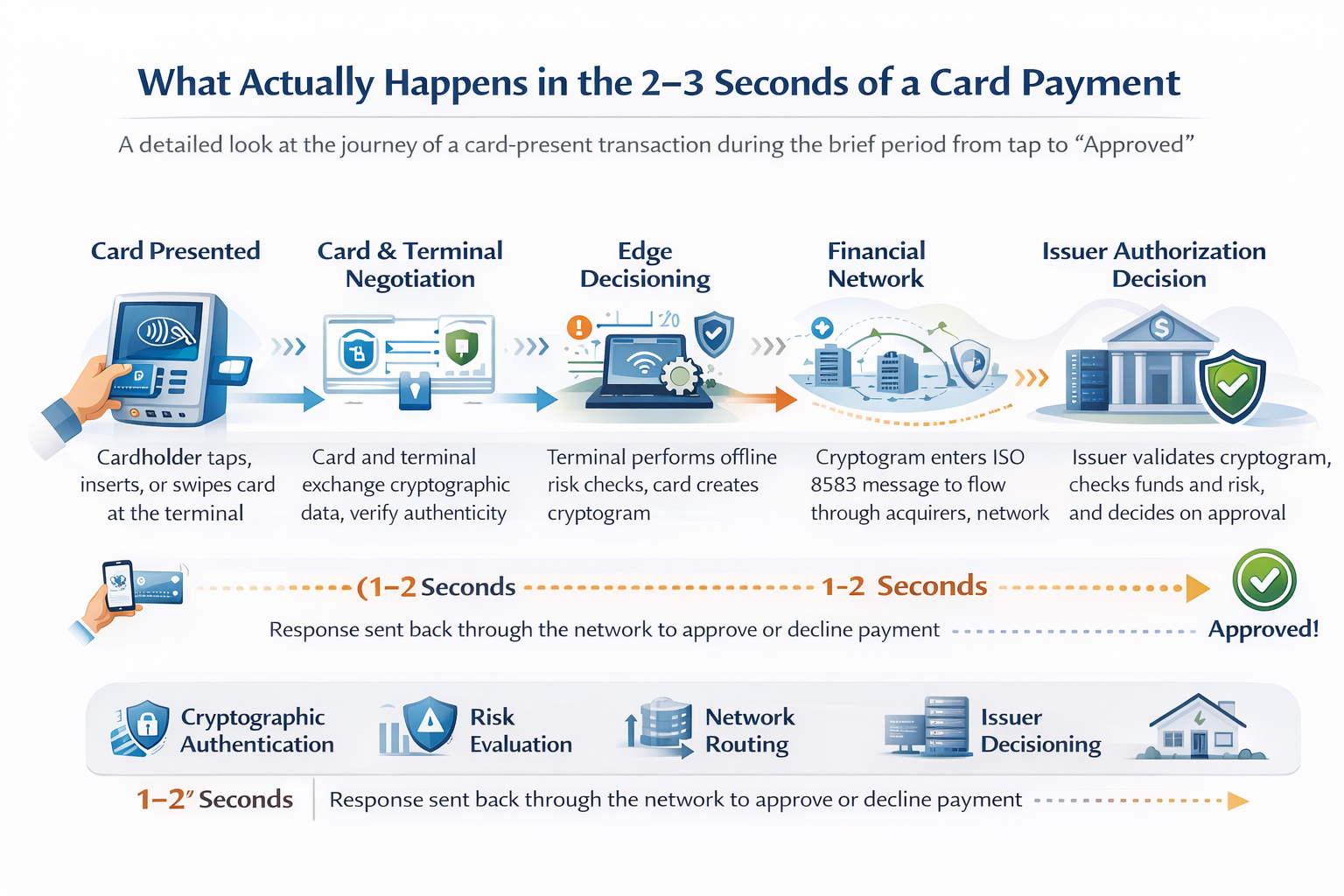
A card payment feels instantaneous. The system behind it is not.
The POS terminal has quietly become critical financial infrastructure — and most architects are still designing it like a payment endpoint.
EMV authenticates the card. PIN still helps authenticate the cardholder.
Every chip card generates a unique cryptographic proof each time you tap or insert it. That proof is why cloning a chip card’s transaction capability is effectively …
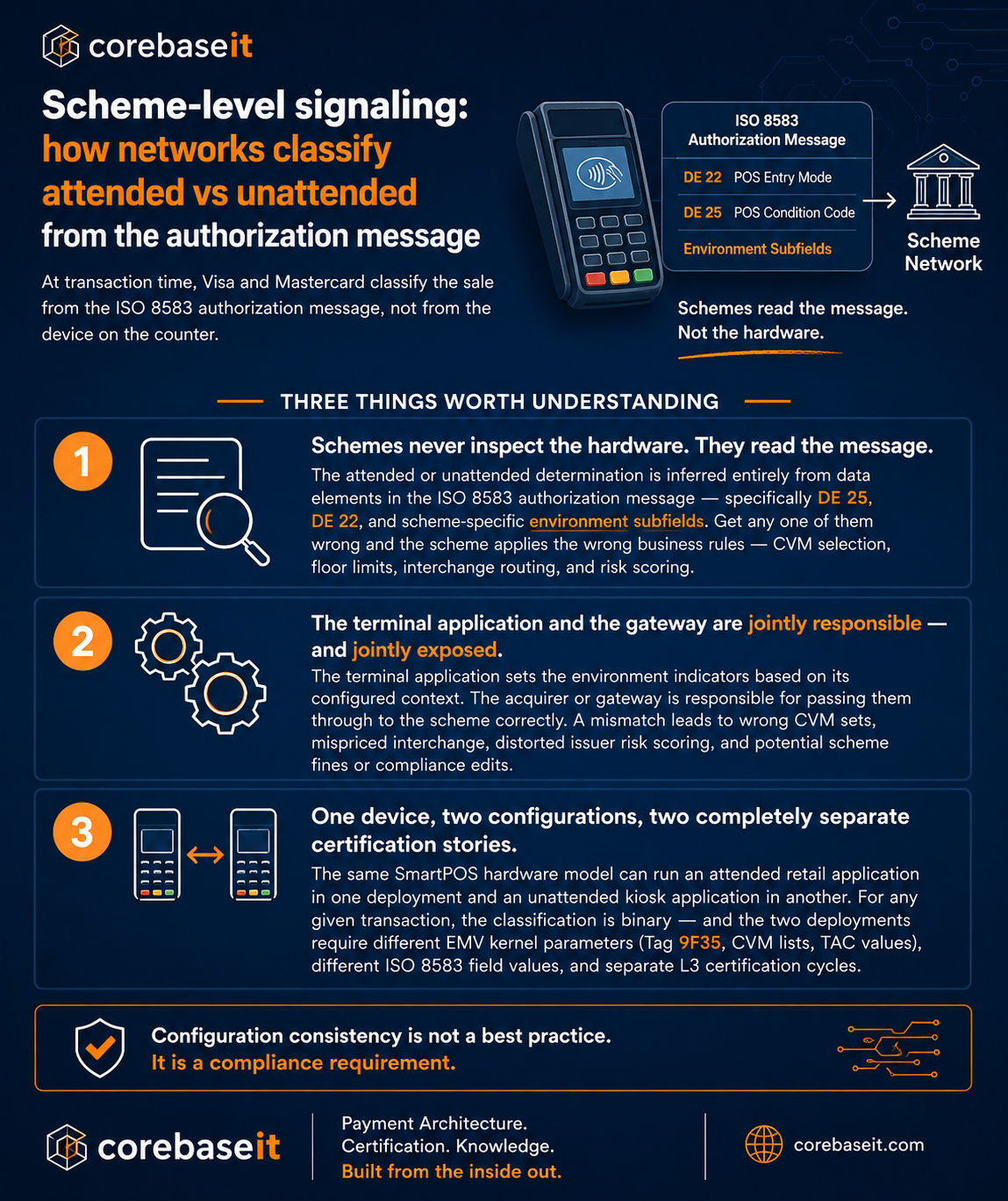
PCI PTS classifies devices at the hardware level. But Visa and Mastercard classify transactions at the message level. No scheme inspects the physical terminal to determine whether …
When people talk about “L3 certification,” they often treat it as a single, uniform process. It isn’t. EMV Level 3 focuses on validating integration of the …
When you certify a SmartPOS terminal, the environment classification isn’t a minor detail — it’s a first-order architectural decision that determines CVM behavior, risk …